Terms of Use
Effective Date: 20/10/2024
Welcome to Pasture Portal (“the Website”). By accessing or using our Website, you agree to comply with and be bound by these Terms of Use. Please read these terms carefully, as they govern your use of the Website and services provided by Pasture Portal.
1. Acceptance of Terms
By accessing or using Pasture Portal, you agree to these Terms of Use and to comply with all applicable laws and regulations. If you do not agree with these terms, you must immediately cease using the Website.
2. Changes to Terms
We reserve the right to modify these Terms of Use at any time. Changes will be posted on this page, and the “Effective Date” will be updated accordingly. By continuing to use the Website after any changes are made, you agree to be bound by the updated Terms of Use.
3. Use of the Website
•You agree to use the Website for lawful purposes only and in a manner consistent with all applicable local, state, national, and international laws and regulations.
•You may not use the Website in any way that may harm, damage, disable, overburden, or impair the Website or interfere with any other party’s use of the Website.
•Pasture Portal grants you a limited, revocable, non-exclusive, non-transferable license to access and use the Website for personal or internal business purposes only. Any unauthorized use of the Website or its content is prohibited.
4. User Accounts and Security
•To access certain features of the Website, you may be required to create an account. When creating an account, you agree to provide accurate, current, and complete information.
•You are responsible for maintaining the confidentiality of your account login details, and for all activities that occur under your account.
•Pasture Portal reserves the right to suspend or terminate your account if we believe you have violated these Terms of Use.
5. Subscription Services
•Pasture Portal offers subscription services for retailers, which may involve recurring billing. By subscribing, you authorize Pasture Portal to charge the subscription fee to the payment method provided at regular intervals as specified in your subscription plan.
•You may cancel your subscription at any time; however, no refunds will be provided for partial billing periods.
•Pasture Portal reserves the right to change subscription fees and features at any time, with reasonable notice to subscribers.
6. Pasture Selection Tool
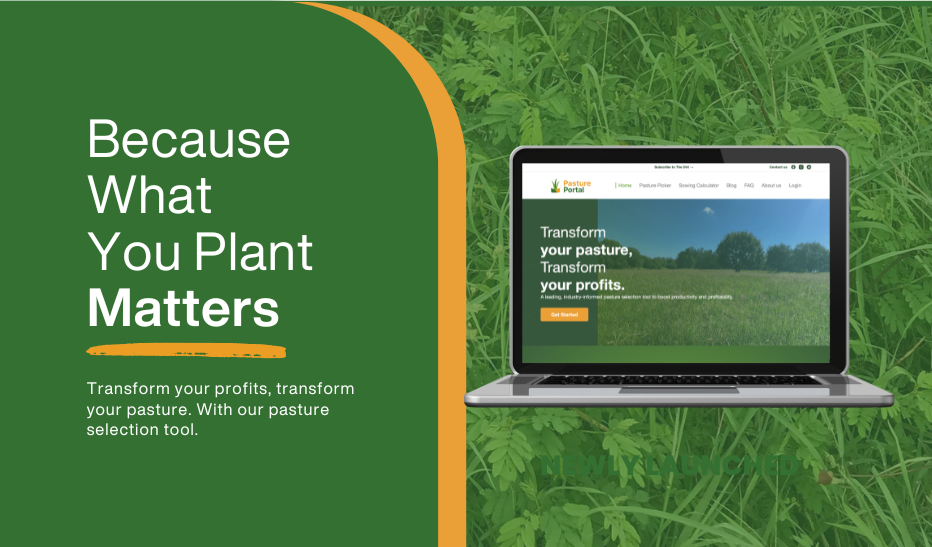
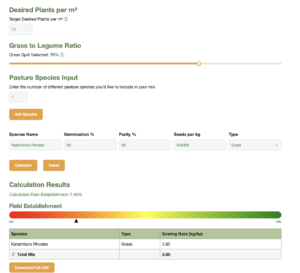
The pasture selection tool is provided as an informational tool to help users identify plant species suitable for specific conditions. This tool is based on publicly available sources and does not constitute professional advice. Pasture Portal does not guarantee the accuracy or suitability of the plant species suggested by the tool.
7. Affiliate Links
The Website may contain links to third-party websites, including affiliate links through which Pasture Portal may earn a commission. Pasture Portal has no control over third-party websites and is not responsible for their content, services, or products. You agree to review the terms and conditions and privacy policies of third-party sites before engaging with them.
8. Promoted Placements
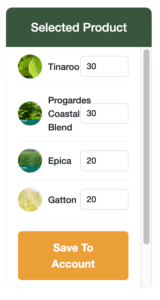
Some cultivars displayed in the pasture selection tool are promoted by suppliers who pay for increased visibility, such as a featured position or a highlighted listing. Promoted placements are identified as “Promoted”. Payment affects where or how prominently a cultivar appears; it does not affect the regional suitability information shown, which is generated on the same basis for every cultivar. A promoted placement is not a recommendation or endorsement by Pasture Portal and does not imply any affiliation with, or sponsorship by, the supplier.
9. Intellectual Property
•All content on the Website, including text, images, logos, software, and any other material (“Content”), is the property of Pasture Portal or its content suppliers and is protected by Australian and international intellectual property laws.
•You may not reproduce, distribute, modify, or create derivative works from any part of the Website’s content without express written permission from Pasture Portal.
•Any unauthorized use of the Website’s content is strictly prohibited and may result in the termination of your rights to use the Website.
•Cultivar and product names shown on the Website are the trademarks or registered plant varieties (Plant Breeder’s Rights) of their respective owners and are used to identify those varieties. Their display does not imply any affiliation with, or endorsement by, the owners.
10. Privacy Policy
Your use of the Website is subject to our Privacy Policy, which outlines how we collect, use, and protect your information. By using the Website, you consent to the collection and use of your information as outlined in the Privacy Policy.
11. Limitation of Liability
•To the fullest extent permitted by law, Pasture Portal will not be liable for any direct, indirect, incidental, special, consequential, or exemplary damages that result from your use of, or inability to use, the Website or any of the services or information provided.
•Pasture Portal does not guarantee that the Website will be available at all times or that the content is free from errors. We do not accept liability for any interruptions, delays, or inaccuracies in the Website’s content.
•The information provided on the Website, including the pasture selection tool, is provided “as is” without any warranties or guarantees. Use of the Website is at your own risk.
12. Termination
Pasture Portal reserves the right to terminate or suspend your access to the Website at any time, with or without cause, and without notice. Upon termination, your right to use the Website and any services will cease immediately.
13. Governing Law
These Terms of Use are governed by and construed in accordance with the laws of Australia, and you agree to submit to the exclusive jurisdiction of the courts of Australia.
14. Indemnification
You agree to indemnify, defend, and hold harmless Pasture Portal, its affiliates, directors, officers, employees, and agents from any and all claims, damages, liabilities, costs, and expenses (including legal fees) arising out of or related to your use of the Website or your breach of these Terms of Use.
15. Severability
If any provision of these Terms of Use is found to be unlawful, void, or unenforceable, that provision will be deemed severable from the remaining provisions and will not affect their validity and enforceability.
Disclaimer
Updated at: 20/10/2024
Pasture Portal (“the Website”) grants you access to the Website and invites you to purchase the services offered here, including subscription plans for retailers.
Definitions and Key Terms
To help explain things as clearly as possible in this Disclaimer, every time any of these terms are referenced, they are strictly defined as:
•Cookie: A small amount of data generated by a website and saved by your web browser. It is used to identify your browser, provide analytics, remember information about you such as your language preference or login information, and track your behavior on the Website for purposes such as analytics and improving the user experience.
•Company: When this policy mentions “Company,” “we,” “us,” or “our,” it refers to Pasture Portal, which is responsible for your information under this Disclaimer.
•Service: Refers to the services provided by Pasture Portal as described on the Website, including access to pasture selection tools, blog content, and subscription-based services for retailers.
•Website: Refers to Pasture Portal’s site, which can be accessed via this URL: www.pastureportal.com.au
•You: A person or entity that is registered with Pasture Portal to use the services.
1. General Disclaimer
The information provided on the Pasture Portal Website is intended for general informational purposes only. While we strive to ensure accuracy, the advice offered through our tools and content is based on publicly available information and should not be considered professional or tailored advice. Any reliance on this information is at your own risk.
2. Pasture Selection Tool Disclaimer
The pasture selection tool is designed to suggest plant species that may suit the conditions entered by users (e.g., region, soil type, rainfall, and pH levels). This tool uses publicly available sources to determine which plants may grow in those conditions. However, it should not be regarded as professional or specific agricultural advice. For further guidance, users are encouraged to consult local agricultural experts or retailers.
3. User and Retailer Interaction
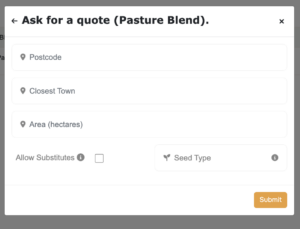
Pasture Portal allows users to request quotes from retailers based on their plant selections. Any advice provided by retailers may or may not be specific, depending on the retailer’s discretion. Pasture Portal is not responsible for the nature of the advice given by retailers, and it is the responsibility of the user and retailer to manage their interactions, including any product or recommendation disputes.
4. Educational Blog Disclaimer
The educational content on the Pasture Portal blog is meant for general informational purposes. While the information is sourced from reliable public sources, it should not be considered as professional or specific advice. We make no guarantees regarding the accuracy or completeness of the content provided.
5. Affiliate Marketing Disclaimer
Pasture Portal may include affiliate links that direct users to third-party websites. We may receive a commission for purchases made through these links. Pasture Portal has no control over these third-party websites, and we are not responsible for their content, services, or products. Users are advised to review the privacy policies and terms of service of any third-party sites they visit.
6. Promoted Placements
Some cultivars are promoted by suppliers for a fee and are labelled “Promoted”. Payment influences placement and visibility only — it does not influence the suitability information, which is the same for every cultivar. Promoted placement is not an endorsement or recommendation by Pasture Portal, and does not imply any affiliation with the supplier. Cultivar and product names are the trademarks or registered plant varieties (PBR) of their respective owners.
7. Quoting and Purchasing Disclaimer
Quotes provided through Pasture Portal are generated by retailers based on the user’s plant selections. Pasture Portal is not responsible for any discrepancies or misunderstandings arising from these quotes or the subsequent transactions between users and retailers. Once a quote is accepted, it is up to the user and retailer to manage the transaction, including the fulfillment of any orders.
8. Use of Cookies
Pasture Portal uses cookies to enhance your experience on the Website. Cookies help us analyze usage data, provide insights into how you navigate the site, and personalize your experience. We may use cookies to store information about your preferences, login details, and other data that help us improve the functionality of the Website.
By using our Website, you consent to the use of cookies for analytics, performance tracking, and other purposes. You can manage your cookie preferences in your browser settings.
9. Subscription Plan for Retailers
Pasture Portal offers subscription services for retailers, which may be subject to recurring billing. By subscribing, you agree to allow Pasture Portal to automatically charge the subscription fee to the payment method you have provided at the agreed intervals. You may cancel your subscription at any time, but you will not be entitled to a refund for any partial months.
10. Limitation of Liability
Pasture Portal endeavors to update and/or supplement the content of the Website on a regular basis. Despite our care and attention, content may be incomplete and/or incorrect.
The materials offered on the Website are provided without any form of guarantee or claim to their correctness. These materials can be changed at any time without prior notice from Pasture Portal.
In particular, all prices on the Website are subject to change and typographical errors. No liability is assumed for the implications of such errors. No agreement is concluded on the basis of such errors.
Pasture Portal shall not bear any liability for hyperlinks to websites or services of third parties included on the Website. From our Website, you can visit other websites by following hyperlinks. While we strive to provide only quality links to useful and ethical websites, we have no control over the content and nature of these sites. The links to other websites do not imply a recommendation for all the content found on these sites.
11. Intellectual Property
All content, design, and functionality on Pasture Portal, including the pasture selection tool and interactive map, are protected by intellectual property laws. Users may not reproduce, distribute, or otherwise use material from this website without prior written consent from Pasture Portal.
12. Changes to the Disclaimer
Pasture Portal reserves the right to modify or update this disclaimer at any time without prior notice. It is your responsibility to review this disclaimer regularly to stay informed of any changes.
Privacy Policy
This Privacy Policy applies to all personal information collected by Pasture Portal Pty Ltd (we, us or
our) via the website located at www.pastureportal.com.au (Website).
1. What information we collect
The kind of Personal Information that we collect from you will depend on how you use the website. The Personal Information which we collect and hold about you may include:
login credentials, payment details, email address, name, phone number, address, credit card details, internet protocol (IP) addresses, location information from a mobile device and information about your employment.
2. Types of information
The Privacy Act 1998 (Cth) (Privacy Act) defines types of information, including Personal Information and Sensitive Information.
Personal Information means information or an opinion about an identified individual or an individual who is reasonably identifiable:
- (a) whether the information or opinion is true or not; and
- (b) whether the information or opinion is recorded in a material form or not
If the information does not disclose your identity or enable your identity to be ascertained, it will in most cases not be classified as “Personal Information” and will not be subject to this privacy policy.
Sensitive Information is defined in the Privacy Act as including information or opinion about such things as an individual’s racial or ethnic origin, political opinions, membership of a political association, religious or philosophical beliefs, membership of a trade union or other professional body, criminal record or health information.
Sensitive Information will be used by us only:
- (a) for the primary purpose for which it was obtained;
- (b) for a secondary purpose that is directly related to the primary purpose; and
- (c) with your consent or where required or authorised by
3. How we collect your Personal Information
- (a) We may collect Personal Information from you whenever you input such information into the Website, related app or provide it to Us in any other way.
- (b) We may also collect cookies from your computer which enable us to tell when you use the Website and also to help customise your Website experience. As a general rule, however, it is not possible to identify you personally from our use of cookies.
- (c) We generally don’t collect Sensitive Information, but when we do, we will comply with the preceding paragraph.
- (d) Where reasonable and practicable, we collect your Personal Information from you only. However, sometimes we may be given information from a third party, in cases like this we will take steps to make you aware of the information that was provided by a third party.
4. Purpose of collection
- (a) We collect Personal Information to provide you with the best service experience possible on the Website and keep in touch with you about developments in our business.
- (b) We customarily only disclose Personal Information to our service providers who assist us in operating the Your Personal Information may also be exposed from time to time to maintenance and support personnel acting in the normal course of their duties.
- (c) By using our Website, you consent to the receipt of direct marketing material. We will only use your Personal Information for this purpose if we have collected such information direct from you, and if it is material of a type which you would reasonably expect to receive from use. We do not use sensitive Personal Information in direct marketing activity. Our direct marketing material will include a simple means by which you can request not to receive further communications of this nature, such as an unsubscribe button link.
Security, Access and correction
- (a) We store your Personal Information in a way that reasonably protects it from unauthorised access, misuse, modification or disclosure. When we no longer require your Personal Information for the purpose for which we obtained in, we will take reasonable steps to destroy, anonymise or de-identify it. Most of the Personal Information that is stored in our client files and records will be kept for a maximum of 7 years to fulfill our record keeping obligations.
- (b) The Australian Privacy Principles:
- (I) permit you to obtain access to the Personal Information we hold about you in certain circumstances (Australian Privacy Principle 12);
- and
- (II) allow you to correct inaccurate Personal Information subject to certain exceptions (Australian Privacy Principle 13).
- (c) Where you would like to obtain such access, please contact us in writing on the contact details set out at the bottom of this privacy policy.
6. Complaint procedure
If you have a complaint concerning the manner in which we maintain the privacy of your Personal Information, please contact us as on the contact details set out at the bottom of this policy. All complaints will be considered by Pasture Portal staff and we may seek further information from you to clarify your concerns. If we agree that your complaint is well founded, we will, in consultation with you, take appropriate steps to rectify the problem. If you remain dissatisfied with the outcome, you may refer the matter to the Office of the Australian Information Commissioner.
7. Overseas transfer
Your Personal Information may be transferred overseas or stored overseas for a variety of reasons. It is not possible to identify each and every country to which your Personal Information may be sent. If your Personal Information is sent to a recipient in a country with data protection laws which are at least substantially similar to the Australian Privacy Principles, and where there are mechanisms available to you to enforce protection of your Personal Information under that overseas law, we will not be liable for a breach of the Australian Privacy Principles if your
Personal Information is mishandled in that jurisdiction. If your Personal Information is transferred to a jurisdiction which does not have data protection laws as comprehensive as Australia’s, we will take reasonable steps to secure a contractual commitment from the recipient to handle your information in accordance with the Australian Privacy Principles.
Contact Us
If you have any questions regarding these Terms of Use, please contact us via:
•Email: [email protected]
Entire Agreement
These Terms of Use, along with our Privacy Policy and Disclaimer, constitute the entire agreement between you and Pasture Portal regarding your use of the Website and supersede any prior agreements, understandings, or representations.