Simple Steps to Better Pasture.

1

Select your region

Choose your farms region through the selector below.

2

Input local conditions

Choose your farms soil type, rainfall and pH.

3

Pasture selections

Check out the pasture species best suited to your farm!

4

Request a quote

Connect with retailers for competitive pricing

Tropical Legumes

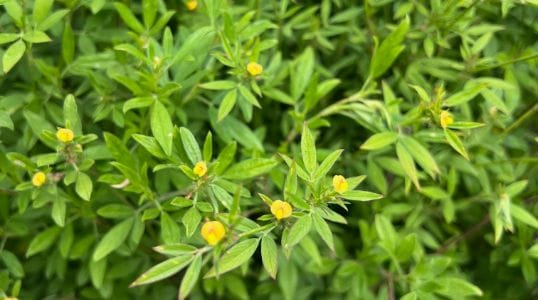
Caribbean Stylo

✔︎ Grows in low-fertility soils

✔︎ Anthracnose tolerant

✔︎ Produces more dry matter and seed compared to Verano 

Read More

✘ Sensitive to frost

✘ Sensitive to water-logging

 Stylos in QLD


Compatible pasture plants

Grasses: Buffel Grass, Rhodes Grass, Bambatsi Panic, Panics, Creeping Bluegrass, Forest Bluegrass, QLD Bluegrass, Sabigrass, Tall Finger Grass, Digit Grass.

Legumes: Siratro, Butterfly Pea, Desmanthus, Round Leaf Cassia, Shrubby Stylo, Common Stylo, Caribbean Stylo.

✔︎ Grows in low-fertility soils

✔︎ Anthracnose tolerant 

✔︎ Similar to Amiga, however does not produce as much dry matter or seed

Read More

✘ Sensitive to frost

✘ Sensitive to water-logging

 Stylos in QLD


Compatible pasture plants

Grasses: Buffel Grass, Rhodes Grass, Bambatsi Panic, Panics, Creeping Bluegrass, Forest Bluegrass, QLD Bluegrass, Sabigrass, Tall Finger Grass, Digit Grass.

Legumes: Siratro, Butterfly Pea, Desmanthus, Round Leaf Cassia, Shrubby Stylo, Common Stylo, Caribbean Stylo.

Siratro

✔︎ Tolerates a wide range of soil types

✔︎ Handles acidic soils

✔︎ Selected for increased leaf yield and rust tolerance

Read More

Does not handle continuous grazing

Does not tolerate water logging

Requires higher fertility soils


Compatible pasture plants

Grasses: Buffel Grass, Rhodes Grass, Bambatsi Panic, Kikuyu, Panics, Setaria, Tall Finger Grass.

Legumes: Burgundy Bean, Butterfly Pea, Creeping Vigna, Glycine, Greenleaf Desmodium, Round Leaf Cassia, Shrubby Stylo, Common Stylo, Caribbean Stylo.

✔︎ Tolerates a wide range of soil types

✔︎ Handles acidic soils

✔︎ Good nitrogen fixing capability

Read More

Does not handle continuous grazing

Does not tolerate water logging

Sensitive to leaf diseases such as bean rust.


Compatible pasture plants

Grasses: Buffel Grass, Rhodes Grass, Bambatsi Panic, Kikuyu, Panics, Setaria, Tall Finger Grass.

Legumes: Burgundy Bean, Butterfly Pea, Creeping Vigna, Glycine, Greenleaf Desmodium, Round Leaf Cassia, Shrubby Stylo, Common Stylo, Caribbean Stylo.

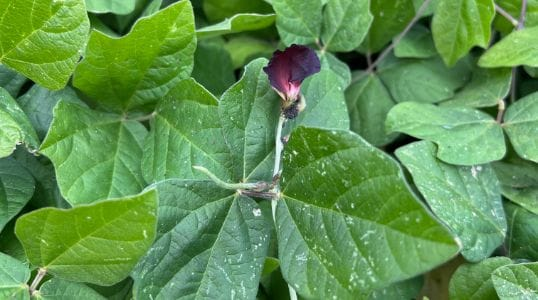
Burgundy Bean

✔︎ Highly palatable

✔︎ Suits a wide range of soil types

✔︎ Regenerates well from seed

Read More

Due to the high palatability, stands can be selectively overgrazed

✘ Susceptible to viruses

✘ Short term perennial/annual


Compatible pasture plants

Grasses: Buffel Grass, Rhodes Grass, Bambatsi Panic, Panics, Setaria, Creeping Bluegrass, Tall Finger Grass.

Legumes: Siratro, Butterfly Pea, Caatinga Stylo, Creeping Vigna, Desmanthus, Glycine, Greenleaf Desmodium.

Caatinga Stylo

✔︎ Tolerates heavy grazing

✔︎ Suited to heavy clay soils

✔︎ Drought tolerant

Read More

✘ Sensitive to frost

✘ Will drop leaf in dry conditions

Does not handle flooding

 Caatinga is a blend of Prima and Unica cultivars

 Stylos in QLD


Compatible pasture plants

Grasses: Buffel Grass, Rhodes Grass, Bambatsi Panic, Panics, Creeping Bluegrass, Forest Bluegrass.

Legumes: Burgundy Bean, Butterfly Pea, Desmanthus.

Centrosema

✔︎ Well adapted to semi-arid regions-  Thrives in tropical and sub-tropical environments with variable rainfall

✔︎ Tolerates wide of range of soils and seasonal flooding

✔︎ High quality and palatability- Good Hay option

Read More

✘ Short-lived annual

✘ Intolerant of continuous grazing

✘ Slow establishment- Can be outcompeted by grasses


Compatible pasture plants

Grasses: Buffel Grass, Rhodes Grass, Bambatsi Panic, Panics, Signal Grass, Sabigrass, Tall Finger Grass.

Legumes: Siratro, Burgundy Bean, Creeping Vigna, Greenleaf Desmodium.

Glycine

✔︎ Earlier flowering than Tinaroo – ideal for cooler sub-tropical areas

✔︎ Highly productive and palatable

✔︎ Better drought tolerance compared to Tinaroo

Read More

✘ Due to palatability, it can be selectively grazed out

Sensitive to frost

✘ Can be an environmental weed


Compatible pasture plants

Grasses: Rhodes Grass, Panics, Setaria, Signal Grass, Tall Finger Grass, Digit Grass.

Legumes: Siratro, Burgundy Bean, Creeping Vigna, Greenleaf Desmodium.

✔︎ Later flowering than Cooper – ideal for warm wet tropical areas

✔︎ Highly productive and palatable

✔︎ Longer growing season compared to Cooper

Read More

✘ Due to palatability, it can be selectively grazed out

Sensitive to frost

✘ Can be an environmental weed


Compatible pasture plants

Grasses: Rhodes Grass, Panics, Setaria, Signal Grass, Tall Finger Grass, Digit Grass.

Legumes: Siratro, Burgundy Bean, Creeping Vigna, Greenleaf Desmodium.

Leucaena

✔︎ High sustained weight gains (Bloat safe)

✔︎ Drought hardy and long lived perennial

✔︎ Fixes nitrogen boosting pastures and also reduces methane 

Read More

Needs fertile and well-drained soils

Costly to establish and weed potential if not managed

Frost and psyllid sensitive

 Leucaena: A guide to establishment and management


Compatible pasture plants

Grasses: Buffel Grass, Rhodes Grass, Bambatsi Panic, Panics, Creeping Bluegrass, Floren Bluegrass, QLD Bluegrass, Sabigrass, Tall Finger Grass, Digit Grass.

Legumes: Winter Growing: Clovers, Medics and Vetches.

Interow: Butterfly Pea, Desmanthus and Caatainga

Greenleaf Desmodium

✔︎ Moderate shade tolerance

✔︎ High palatability

✔︎ Good warm-season growth; complements tussocky and running grasses with its climbing, twining habit

Read More

✘ Succumbs to overgrazing

✘ Slow to establish

✘ Does not tolerate prolonged dry periods 


Compatible pasture plants

Grasses: Rhodes Grass, Panics, Setaria, Signal Grass, Tall Finger Grass, Digit Grass.

Legumes: Siratro, Burgundy Bean, Creeping Vigna, Glycine.

Desmanthus

✔︎ Tolerates heavy grazing once established

✔︎  Drought tolerant

✔︎  Non-bloating legume

Read More

✘ There are improved cultivars that offer higher dry matter production

✘  Looses leaf in dry/cold conditions

✘  High hard seed content


Compatible pasture plants

Grasses: Buffel Grass, Bambatsi Panic, Panics, Creeping Bluegrass, Forest Bluegrass, Mitchell Gras, QLD Bluegrass, Tall Finger Grass, Digit Grass.

Legumes: Burgundy Bean, Butterfly Pea, Caatinga Stylo, Caribbean Stylo.

→ See Tech Sheet Central Blend

✔︎ High protein, highly palatable and digestible summer legume; non-bloating and non-toxic (no mimosine)

✔︎ Early–mid flowering cultivars support seedling recruitment (Persistence), plus a longer-season component to keep quality feed later into the season

Read More

✔︎ Drought tolerant (deep taproot) and tolerant of heavy grazing once established; lifts pasture dry matter and botanical diversity

Establishment is the hard part — very fine seed needs surface/very shallow sowing with low competition and reliable moisture/follow-up rain, see Establishment Guide

In higher rainfall or cooler regions, Coastal or Southern Blends are better option with better cultivars in the blend

Best on neutral–alkaline clay soils, not suited to acidic or light/sandy country


Compatible pasture plants

Grasses: Buffel Grass, Bambatsi Panic, Panics, Creeping Bluegrass, Forest Bluegrass, Mitchell Gras, QLD Bluegrass, Tall Finger Grass, Digit Grass.

Legumes: Burgundy Bean, Butterfly Pea, Caatinga Stylo, Caribbean Stylo.

→ See Tech Sheet Coastal Blend

✔︎ High protein, highly palatable and digestible summer legume; non-bloating and non-toxic (no mimosine)

✔︎  Mid–late maturity selected to maintain quality feed later into the season; designed to handle higher rainfalls typical of coastal regions, suited to the coastal fringes of northern NSW and QLD

Read More

✔︎ High-yielding Progardes cultivars that, beyond grazing, can also be cut for quality hay or silage

Establishment is the hard part — very fine seed needs surface/very shallow sowing with low competition and reliable moisture/follow-up rain, see Establishment Guide

Designed for higher rainfall paddocks (>800 mm); not the best option for lower-rainfall districts

Best on neutral–alkaline clay soils, not suited to acidic or light/sandy country


Compatible pasture plants

Grasses: Buffel Grass, Bambatsi Panic, Panics, Creeping Bluegrass, Forest Bluegrass, Mitchell Gras, QLD Bluegrass, Tall Finger Grass, Digit Grass.

Legumes: Burgundy Bean, Butterfly Pea, Caatinga Stylo, Caribbean Stylo.

→ Establishing Progardes Desmanthus by feeding unscarified hard seed to cattle/horses so seed passes through and is deposited in dung pats across the paddock. See Faecal Seeding Guide

✔︎ Low-input establishment, avoids full paddock cultivation or seed bed preparation

✔︎  Suited to lower rainfall and variable seasons where follow-up rain is uncertain

Read More

✔︎ Uses hard, unscarified seed that stays viable through the animal and can germinate later when conditions suit

 Goats/sheep not recommended (seed viability after passage is too low)

 Can be slow/patchy and uneven unless you actively manage livestock movement and lick-tub placement

 Scarified/Other Progardes Blends not suitable (won’t survive the gut in a viable state), must use hard seed


Compatible pasture plants

Grasses: Buffel Grass, Bambatsi Panic, Panics, Creeping Bluegrass, Forest Bluegrass, Mitchell Gras, QLD Bluegrass, Tall Finger Grass, Digit Grass.

Legumes: Burgundy Bean, Butterfly Pea, Caatinga Stylo, Caribbean Stylo.

→ See Tech Sheet Southern Blend

✔︎ High protein, highly palatable and digestible summer legume; non-bloating and non-toxic (no mimosine)

✔︎  Selected for early flowering in cooler southern environments so it can seed down before frost and hold plant numbers over time

Read More

✔︎ Drought tolerant (deep taproot) and tolerant of heavy grazing once established; lifts pasture dry matter and botanical diversity

Establishment is the hard part — very fine seed needs surface/very shallow sowing with low competition and reliable moisture/follow-up rain, see Establishment Guide

Summer-active only — growth is checked by frost and it won’t “fix” a winter feed gap in cold districts

Best on neutral–alkaline clay soils, not suited to acidic or light/sandy country


Compatible pasture plants

Grasses: Buffel Grass, Bambatsi Panic, Panics, Creeping Bluegrass, Forest Bluegrass, Mitchell Gras, QLD Bluegrass, Tall Finger Grass, Digit Grass.

Legumes: Burgundy Bean, Butterfly Pea, Caatinga Stylo, Caribbean Stylo.

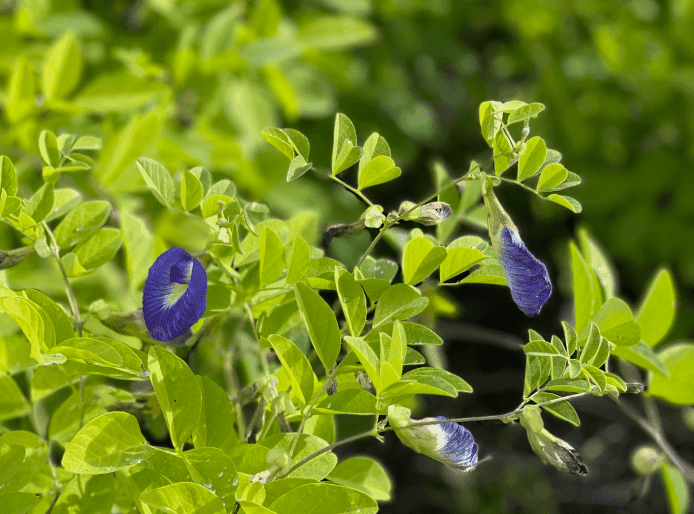
Butterfly pea

✔︎ Large seed – Easy to establish

✔︎ Persistent in long dry seasons

✔︎ Highly palatable

Read More

Cannot handle continuous grazing

  Does not tolerate frosts

  High soil fertility needed


Compatible pasture plants

Grasses: Buffel Grass, Rhodes Grass, Bambatsi Panic, Panics, Setaria, Tall Finger Grass, Digit Grass.

Legumes: Siratro, Burgundy Bean, Butterfly Pea, Caatinga Stylo, Creeping Vigna, Desmanthus, Caribbean Stylo.

Common Stylo

✔︎ Typically sold in a mix with Temprano

✔︎ Adapted to low fertile acid soils

✔︎ Can be used in cut and carry systems

Read More

✘ Will succumb to frost

✘ Does not tolerate heavy grazing

Stylos in QLD


Compatible Pasture Plants

Grasses: Rhodes Grass, Panics, Setaria, Signal Grass, Humidicola.

Legumes: Siratro, Round Leaf Cassia, Caribbean Stylo.

✔︎ Typically sold in a mix with Nina

✔︎ Adapted to low fertile acid soils

✔︎ Can be used in cut and carry systems

Read More

✘ Will succumb to frost

✘ Does not tolerate heavy grazing

Stylos in QLD


Compatible Pasture Plants

Grasses: Rhodes Grass, Panics, Setaria, Signal Grass, Humidicola.

Legumes: Siratro, Round Leaf Cassia, Caribbean Stylo.

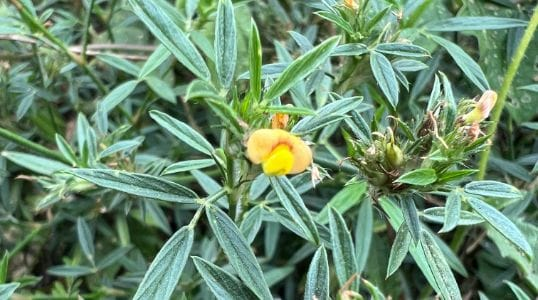
Shrubby Stylo

✔︎ Wide adaptation

✔︎ Suited to extensive grazing systems

✔︎ Highly drought tolerant

Read More

✘ Siran has better anthracnose tolerance

✘ Can become a monoculture if not managed

✘ Palatability issues

 Stylos in QLD


Compatible pasture plants

Grasses: Buffel Grass, Creeping Bluegrass, Forest Bluegrass, QLD Bluegrass, Sabigrass, Tall Finger Grass, Digit Grass.

Legumes: Siratro, Round Leaf Cassia, Caribbean Stylo.

✔︎ Similar to Seca; However has improved anthracnose tolerance

✔︎ Suited to extensive grazing systems

✔︎ Highly drought tolerant

Read More

✘ Can become a monoculture if not managed

✘ Palatability issues

 Stylos in QLD


Compatible pasture plants

Grasses: Buffel Grass, Creeping Bluegrass, Forest Bluegrass, QLD Bluegrass, Sabigrass, Tall Finger Grass, Digit Grass.

Legumes: Siratro, Round Leaf Cassia, Caribbean Stylo.

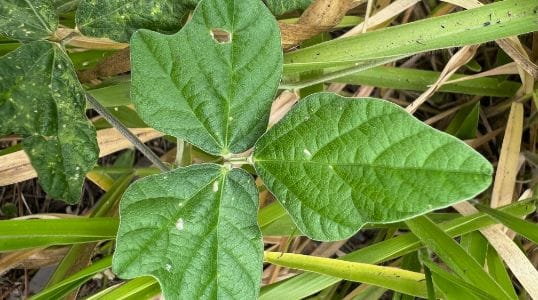
Creeping Vigna

✔︎ Tolerates heavy grazing

✔︎ Tolerates acidic soils

✔︎ Spreads under grazing

Read More

✘ Poor seed yield; therefore can be difficult to source seed

✘ Frost sensitive

✘ Sensitive to prolonged dry conditions


Compatible Pasture Plants

Grasses: Rhodes Grass, Kikuyu, Panics, Setaria, Signal Grass, Creeping Bluegrass, Humidicola, Sabigrass, Tall Finger Grass, Digit Grass.

Legumes: Siratro, Burgundy Bean, Butterfly Pea, Glycine, Greenleaf Desmodium.

Cassia

✔︎ Adapted to low-fertility sandy soils

✔︎ Quick establishment

✔︎ High Dry matter production

Read More

Typically, poor palatability; However, producers note that when the plant has hayed off, livestock will consume

Potential environmental weed

✘ Will not tolerate water-logging 


Compatible pasture plants

Grasses: Rhodes Grass, Panics, Forest Bluegrass, QLD Bluegrass, Sabi grass, Tall Finger Grass, Digit Grass.

Legumes: Siratro, Shrubby Stylo, Common Stylo, Caribbean Stylo.

Temperate Legumes

Lucerne

→ Moderate Winter-active (6) lucerne (Medicago sativa) — Aurora

✔︎ Winter-activity class 6 — moderate winter growth with good cool-season production and regrowth between grazings/cuts

✔︎ Good resistance to Phytophthora root rot; medium–low resistance to anthracnose; low resistance to stem nematode, bacterial wilt and leaf diseases.

Read More

✔︎ Public variety with broad fit on well-drained neutral–alkaline soils for grazing, hay and silage where reliable winter–spring feed is required

Persistence under stress is generally lower than more dormant classes (WA 3–5); manage grazing and summer moisture

No lucerne has resistance to frost or waterlogging — avoid depressions/poorly drained sites

LR ratings to stem nematode, bacterial wilt and leaf spots mean risk where these issues occur without integrated control


Compatible pasture plants

Compatible with many annual and perennial temperate grasses.

Grasses: Perennial ryegrass, Annual/Italian ryegrass, Phalaris, Cocksfoot, Tall fescue (choose by soil and summer feed goals).
Legumes: Subterranean clover (well-drained soils), Balansa/Persian clover (periodically wet flats), Red clover/White clover in higher-rainfall or irrigation.

Notes:

— In comparison: vs semi-dormant WA5–6 lucernes, Aurora sits mid-pack for winter growth and persistence; vs highly winter-active WA 9–10 types (e.g., Sequel) it has less winter activity but typically better stand life under stress; vs older Hunter River it carries strong aphid and PRR resistance.
— Sow 5–10 mm deep into a firm, moist seedbed (autumn; late summer under irrigation).
— Inoculation: Group AL rhizobia.
— Ensure P & S; maintain K on lighter soils; correct subsurface pH(CaCl₂) ≥5.5; avoid waterlogging.
— Grazing/cutting, first graze after the pull test; rotationally graze or cut; leave 5–7 cm residual; allow an occasional flowering period to protect crowns.

→ Highly winter-active (9) lucerne (Medicago sativa) — Sequel

✔︎ Winter activity class 9 (high) — bred for strong cool-season growth and fast regrowth between grazings/cuts

✔︎ Moderate resistance to Phytophthora root rot and good resistance to anthracnose. Susceptible to stem nematode, bacterial wilt and leaf spots.

Read More

✔︎ Suitable where a long harvest window and frequent cuts/grazings are required; highly winter-active types give longer seasons and high early-years production

More management needed to preserve persistence under stress than semi-dormant types; dormant/semi-dormant lucernes generally outlast highly winter-active varieties under stress

No cultivar has resistance to frost or waterlogging — avoid depressions/poorly drained sites

Where stem nematode or bacterial wilt occur, Sequel’s ratings (S) mean risk of loss without integrated control


Compatible pasture plants

Compatible with many annual and perennial temperate grasses.

Grasses: Perennial ryegrass, Annual/Italian ryegrass, Phalaris, Cocksfoot, Tall fescue (choose by soil and summer feed goals).
Legumes: Subterranean clover (well-drained soils), Balansa/Persian clover (periodically wet flats), Red clover/White clover in higher-rainfall or irrigation.

Notes:

— In comparison: vs semi-dormant WA5–6 lucernes = more winter feed and faster regrowth but typically shorter stand life; vs intermediate WA 7 types = more winter growth, similar or lower persistence unless well-managed; vs Sequel HR = similar production but upgraded PRR/anthracnose resistance; vs WA10 “very high” types = slightly less winter activity but usually a touch better persistence.
— Sow 5–10 mm deep into a firm, moist seedbed (autumn; late summer under irrigation).
— Inoculation: Group AL rhizobia.
— Ensure P & S; maintain K on lighter soils; correct subsurface pH(CaCl₂) ≥5.5; avoid waterlogging.
— Grazing/cutting, first graze after the pull test; rotationally graze or cut; leave 5–7 cm residual; allow an occasional flowering period to protect crowns.

→ Winter-active (7) lucerne (Medicago sativa) — Trifecta

✔︎ Winter-activity class 7 — solid winter growth with good regrowth between grazings/cuts

✔︎ Public variety (non-PBR) widely listed; broad fit on well-drained neutral–alkaline soils for grazing, hay and silage

Read More

✔︎ Good resistance to spotted alfalfa aphid and blue-green aphid; moderate resistance to Phytophthora root rot; good resistance to anthracnose and bacterial wilt; but only low resistance to stem nematode and leaf diseases.

Persistence under stress generally lower than semi-dormant classes (WA 3–5) — a known trade-off with higher winter activity

No lucerne has resistance to frost or waterlogging — avoid depressions/poorly drained sites

Low resistance to stem nematode and only MR/ LR to PRR/leaf diseases — higher risk where these issues occur without integrated control


Compatible pasture plants

Compatible with many annual and perennial temperate grasses.

Grasses: Perennial ryegrass, Annual/Italian ryegrass, Phalaris, Cocksfoot, Tall fescue (choose by soil and summer feed goals).
Legumes: Subterranean clover (well-drained soils), Balansa/Persian clover (periodically wet flats), Red clover/White clover in higher-rainfall or irrigation.

Notes:

— In comparison: vs Sequel (WA 9) higher winter activity and longer cutting season but typically shorter stand life under stress; Trifecta (WA 7) trades a little winter feed for generally better persistence potential.
— Sow 5–10 mm deep into a firm, moist seedbed (autumn; late summer under irrigation).
— Inoculation: Group AL rhizobia.
— Ensure P & S; maintain K on lighter soils; correct subsurface pH(CaCl₂) ≥5.5; avoid waterlogging.
— Grazing/cutting, first graze after the pull test; rotationally graze or cut; leave 5–7 cm residual; allow an occasional flowering period to protect crowns.

Serradella

→ Early–mid Yellow serradella (Ornithopus compressus)

✔︎ Very hard-seeded → excellent regeneration and summer-sowing suitability

✔︎ Acid sandy soils specialist (low Al toxicity tolerance relative to many legumes)

Read More

✔︎ Good drought tolerance; competitive on deep sands where sub clover struggles

Slower establishment and less bulk than French types on better loams

Not suited to heavy clays or prolonged waterlogging; avoid saline depressions

Small seed demands excellent seed-soil contact and slug/snail control


Compatible pasture plants (annual forage mixes)

Acid sandplain: Avila + El Gara or Margarita (to lift bulk) + ryecorn/oats as light cover.
Patchy paddocks: Avila base + light sub clover on better microsites.
Drought-prone blocks: Avila + hard-seeded French (low % Cadiz if an early kick is needed).

Notes:

— In comparison: vs French serradellas (e.g., El Gara/Margarita) = far harder-seeded and better for summer-sown pods/regeneration but less bulk on better loams; vs Cadiz (soft French) = much harder-seeded with better carryover, but less early feed; vs sub clover = stronger on deep acid sands, but less suited to heavier/wet clays.

— Sow 5–10 mm (very shallow); press wheels/rolling help.
— Inoculation: Group S.
— P & S; maintain K on deep sands.
— Rotate; defer at flowering to build seedbank.

→ Early–mid French serradella (Ornithopus sativus), ~95–110 days to flowering

✔︎ Very fast to first feed; strong late-winter–spring production

✔︎ Excellent hay/silage; cures cleanly

Read More

✔︎ Best on acid to neutral sands/sandy loams; tolerates brief surface wetness

Soft-seeded — low carry-over; typically re-sown each year

Not for heavy, prolonged waterlogging or saline depressions

Establishment can be checked by RLEM/snails


Compatible pasture plants (annual forage mixes)

Acid sandplain: Cadiz + a hard-seeded French (El Gara or Margarita) to carry over; keep grass rates moderate.Better Sandy loam: Cadiz + light sub clover to boost shoulder feed on better patches.
Long spring/irrigation: Cadiz + Italian ryegrass and a later serradella (Santorini) for extended spring quality.

Notes:

— In comparison: vs hard-seeded French (El Gara/Margarita) = quicker early feed but poor carry-over; vs Avila (yellow) = faster, bulkier on better sands/loams but far less hard-seeded/regenerative; vs later French (Santorini) = earlier, shorter window but less total late spring.

— Sow 5–10 mm (very shallow); press wheels/rolling help.
— Inoculation: Group S.— Inoculation: Group S.
— P & S; maintain K on deep sands.
— Rotate; defer at flowering to build seedbank.

→ Mid-season French serradella (Ornithopus sativus)

✔︎ Hard-seeded with strong regeneration — reliable in ley rotations

✔︎ Adapted to acid sands/sandy duplexes; handles false breaks

Read More

✔︎ Summer-sown pods give cheap, even recruitment

Slightly slower early winter growth than Cadiz

Avoid heavy, prolonged waterlogging and saline sites

Limited broadleaf herbicide options at establishment


Compatible pasture plants (annual forage mixes)

Acid sandplain: El Gara backbone + small % Cadiz for early bulk + Italian ryegrass (moderate).
Sandy duplex/better patches: El Gara + light–moderate sub clover for shoulder feed.
Cropping rotations: El Gara + ryecorn/oats as cover or silage; plan a spring spell for seed set.

Notes:

— In comparison: vs Cadiz (soft French) = much better carry-over/hard seed but slower early feed; vs Margarita (hard French) = similar regeneration, Margarita can be bulkier on better loams; vs Avila (yellow) = more bulk on better sands/loams but less suited to the deepest acid sands; vs later French (e.g., Santorini) = earlier finish, less late-spring feed.

— Sow 5–10 mm (very shallow); press wheels/rolling help.
— Inoculation: Group S.
— P & S; maintain K on deep sands.
— Rotate; defer at flowering to build seedbank.

→ Mid-season French serradella (Ornithopus sativus)

✔︎ Hard-seeded with dependable self-regeneration

✔︎ Strong late-winter–spring feed; good stubble carry-over

Read More

✔︎ Suited to acid sands–sandy loams; tolerates false breaks

Builds feed more slowly than Cadiz in the first 6–8 weeks — later first graze

Avoid heavy clays, prolonged waterlogging, saline depressions

Pods can shatter if over-ripe — manage spring timing


Compatible pasture plants (annual forage mixes)

Acid sandplain: Margarita + Cadiz (for quick early feed) + Italian ryegrass (moderate).
Better sandy loam: Margarita + light–moderate sub clover for extra winter leaf.
Longer springs: Margarita + Santorini to extend the spring window; add ryegrass under irrigation.

Notes:

— In comparison: vs Cadiz (soft French) = slower early bulk but far better carry-over; vs El Gara (hard French) = similar regeneration with more bulk on better loams; vs Avila (yellow) = higher winter–spring bulk on sands/loams but less suited to the deepest acid sands

— Sow 5–10 mm; summer-sow pods where suited.
— Inoculation: Group S.
— P & S; K on deep sands.
— Rotate; spell at flowering to sustain regeneration.

→ Mid–late French serradella (Ornithopus sativus)

✔︎ Later maturity — holds quality deeper into long/wet springs or under irrigation

✔︎ Hard-seeded with good regeneration; suits summer-sown pods

Read More

✔︎ Excellent spring bulk and hay/silage potential

Builds early biomass more slowly than Cadiz — later first graze; suits longer springs rather than short/cold winters

Poorly adapted to heavy, waterlogged clays or saline patches

Needs a spring spell at flowering for reliable seed set — continuous grazing then will reduce regeneration


Compatible pasture plants (annual forage mixes)

Long spring/irrigation: Santorini + Italian ryegrass (and/or tall fescue under irrigation).
Balanced season: Santorini + Margarita or El Gara to cover mid + late windows.
Early kick: Add a small % Cadiz for quick first feed, keeping grass rates moderate.

Notes:

— In comparison: vs Cadiz (soft French) later, slower early bulk but much better carry-over; vs El Gara/Margarita (hard French) later finish with more late-spring feed, similar regeneration; vs sub clover longer spring on sands/duplex but less suited to heavy, wet clays.

— Sow 5–10 mm; summer-sow pods where suited.
— Inoculation: Group S.
— P & S; K on deep sands.
— Rotate; spell at flowering to sustain regeneration.

Balansa Clover

→ Mid-season annual balansa clover (Trifolium michelianum), ~115–125 days to flowering

✔︎ Good late-winter–spring feed and high-quality hay/silage (hollow stems cure well)

✔︎ Waterlogging tolerant — suits flats and heavier soils with periodic inundation

Read More

✔︎ Broad adaptation — neutral to mildly alkaline loams/clays; tolerates mild salinity

Unimproved/variable seed — maturity, hard-seed %, and disease tolerance can vary between sources

Requires a spring spell — continuous grazing at flowering will prevent regeneration

Less suited to deep sands or low-fertility, very dry sites; establishment can be checked by RLEM/snails/slugs


Compatible pasture plants

Compatible with many annual and perennial temperate grasses.

Grasses: Perennial Ryegrass, Annual/Italian Ryegrass, Phalaris, Cocksfoot, Tall Fescue.

Legumes: Subterranean Clover (on drier ridges), Persian Clover (on wetter flats), White Clover in higher-rainfall or irrigated areas.

Notes:

— In comparison: vs Paradana similar maturity but less predictable; vs Bolta earlier and less suited to very long/wet springs; vs sub clover better on wet flats but poorer on deep, dry sands.

— Sow shallow (5–10 mm) into a firm, moist seedbed.
— Inoculation: Group C rhizobia.
— Ensure P & S; monitor K & Mo on lighter soils.
— Rotationally graze through winter; defer grazing at flowering (Sept–Oct) to maintain the seedbank.

→ Mid-season annual balansa clover (Trifolium michelianum), ~115–120 days to flowering

✔︎ Excellent hay/silage option — hollow stems cure quickly with good leaf retention

✔︎ Very waterlogging-tolerant — thrives on flats and heavy soils prone to periodic inundation

Read More

✔︎ Hard-seeded — regenerates well from the soil seed bank under proper spring seed set

Requires spring spell for seed set — continuous grazing will prevent regeneration

Less suited to deep sands or low-fertility dry sites

Seedling establishment can be checked by red-legged earth mite, snails or slugs — monitor early


Compatible pasture plants

Compatible with many annual and perennial temperate grasses.

Grasses: Perennial Ryegrass, Annual/Italian Ryegrass, Phalaris, Cocksfoot, Tall Fescue.

Legumes: Subterranean Clover (on drier ridges), Persian Clover (on wetter flats), White Clover in higher-rainfall or irrigated areas.

Notes:

— In comparison: vs Frontier (early) = slower early but longer spring; vs Bolta (late) = earlier finish with less late-spring bulk; vs common/unimproved = similar maturity but more predictable performance/persistence.

— Sow shallow (5–10 mm) into a firm, moist seedbed.
— Inoculation: Group C rhizobia.
— Ensure adequate P & S; monitor K & Mo on lighter soils.
— Rotationally graze through winter; defer grazing during flowering (Sept–Oct) to maintain the soil seed bank for persistence.

Bladder Clover

→ Mid-season annual bladder clover (Trifolium spumosum)

✔︎ Self-regenerating type with high hard-seed levels for persistence under cropping/grazing rotations

✔︎ Suits neutral–mildly alkaline, well-drained loams/clays; broadly used in ~400–650 mm rainfall zones

Read More

✔︎ Productive late-winter–spring feed; can be made into quality conserved fodder with correct curing

Intolerant of salinity and waterlogging — avoid depressions/heavy, wet paddocks

Needs a spring spell at flowering — continuous grazing at flowering will exhaust seedbank and reduce regeneration

Can contribute to bloat risk in lush mixed pastures — manage diet and access to roughage/salt blocks


Compatible pasture plants

Compatible with many annual and perennial temperate grasses.

Grasses: Perennial Ryegrass, Annual/Italian Ryegrass, Phalaris, Cocksfoot, Tall Fescue.

Legumes: Subterranean Clover (on lighter/drier microsites), Balansa/Persian Clover (on better-moisture flats), Medics on alkaline rises.

Notes:

— In comparison: vs balansa less waterlogging tolerant but stronger fit on neutral–alkaline heavier soils; vs Persian far more hard-seeded/regenerative and better on drier sites, but poorer on wet flats; vs sub clover stronger on neutral–alkaline clays/loams, less suited to deep acidic sands; vs medics similar alkaline fit, Bartolo offers later spring feed where seasons allow.

— Sow shallow (5–10 mm) into a firm, moist seedbed.
— Inoculation: Group C rhizobia.
— Ensure P & S; monitor K & Mo on lighter soils.
— Rotationally graze through winter; defer grazing at flowering (Sept–Oct) to maintain the seedbank.

Berseem Clover

→ Mid-season annual berseem clover (Trifolium alexandrinum)

✔︎ Big winter–spring feed with very palatable, high-quality forage; rapid regrowth after grazing/cutting

✔︎ Handles periodically wet, heavier flats better than most annual clovers; tolerates mild salinity

Read More

✔︎ Best on neutral–mildly alkaline loams/clays; fits irrigated or reliable >550–600 mm districts (drier north: target ~700–750 mm+)

Soft-seeded — poor self-regeneration; plan to re-sow annually

Frost-tender at early stages

Less suited to deep sands or strongly acidic soils (aim pH(Ca) ≳5.5–6)


Compatible pasture plants

Compatible with many annual and perennial temperate grasses.

Grasses: Annual/Italian ryegrass, Perennial ryegrass (irrigated), Tall fescue, Cocksfoot; cereals for silage/green-chop (e.g., oats/ryecorn).

Legumes: Balansa and Persian (on wetter flats), Sub clover on drier microsites; white clover under irrigation/high rainfall.

Notes:

— In comparison: vs Balansa faster cut-and-graze regrowth and higher early bulk but soft-seeded (low carry-over); vs Persian earlier, shorter window with less flood tolerance/regeneration; vs Sub clover better on wet flats/under irrigation, poorer on deep acid sands and drier ridges. Less bloat risk compared to Balansa.

— Sow shallow (5–10 mm) into a firm, moist seedbed.
— Inoculation: Group B rhizobia.
— Ensure P & S; monitor K & Mo on lighter soils or after hay cuts.

Barrel Medics

→ Short season annual barrel medic (Medicago truncatula), ~80 days to first flower

✔︎ Earliest maturing aphid-resistant barrel medic; good seedling and early vigour

✔︎ Fits low–medium rainfall neutral–alkaline soils

Read More

✔︎ Hard-seeded — reliable self-regeneration in ley rotations; drought-tolerant growth habit

Not for acidic or waterlogged/saline soils; best where pH is neutral–alkaline and drainage is good

Herbicide residue sensitivity risk

Animal health cautions (medic group)


Compatible pasture plants

Compatible with many annual and perennial temperate grasses.

Grasses: Annual/Italian ryegrass, barley/oats/ryecorn for winter feed or silage; phalaris/cocksfoot on suitable soils.

Legumes: Sub clover on slightly acidic microsites; other barrel/strand medics for staggered maturity.

Notes:

— In comparison: vs Parabinga = similar early–mid barrel medic fit, but Caliph is earlier (up to ~5 days) and positioned as the earliest maturing aphid-resistant barrel medic (BGA + SAA); vs other medic cultivars = noted for superior boron toxicity tolerance; vs sub clover = generally stronger in low-rainfall situations on neutral–alkaline soils, poorer on acidic/wet sites.

— Sowing depth: shallow (≈5–10 mm) into a firm, moist seedbed.
— Inoculation: Group AM (annual medics)
— Ensure P & S; maintain K on lighter soils.
— Graze once well anchored (pull test). Rotate through winter; defer at flowering to replenish seed set.

→ Early–mid season annual barrel medic (Medicago truncatula), ~80 days to first flower

✔︎ Vigorous, fast-growing type for low–medium rainfall (≈300 mm+), suited to neutral–alkaline loams/clays (pH(CaCl₂) ≳6.5)

✔︎ Aphid resistance: rated resistant/very resistant to bluegreen aphid (BGA) and spotted alfalfa aphid (SAA) (relative to common medics)

Read More

✔︎ Hard-seeded — reliable self-regeneration in ley rotations; drought-tolerant growth habit

Not for acidic or waterlogged/saline soils; best where pH is neutral–alkaline and drainage is good

Like other medics, can suffer RLEM/lucerne flea and cowpea aphid — monitor early

Animal health cautions (medic group): occasional photosensitisation in horses; red-gut in sheep; bloat risk in lush mixed pastures


Compatible pasture plants

Compatible with many annual and perennial temperate grasses.

Grasses: Annual/Italian ryegrass, barley/oats/ryecorn for winter feed or silage; phalaris/cocksfoot on suitable soils.

Legumes: Sub clover on slightly acidic microsites; other barrel/strand medics for staggered maturity.

Notes:

— In comparison: vs later barrel/strand medics earlier first feed and better fit to low–medium rainfall, but shorter spring window; vs older aphid-susceptible barrel medics markedly better BGA/SAA resistance; vs sub clover stronger on neutral–alkaline loams/clays in drier belts, poorer on acid/wet soils.

— Sowing depth: shallow (≈5–10 mm) into a firm, moist seedbed.
— Inoculation: Group AM (annual medics), strain WSM1115 (AIRG/GRDC).
— Ensure P & S; maintain K on lighter soils.
— Graze once well anchored (pull test). Rotate through winter; defer at flowering to replenish seed set.

→ Early–mid season barrel medic (Medicago truncatula)

✔︎ Suited to low–medium rainfall mixed-farming zones (~325–550 mm) on neutral–alkaline, well-drained loams/clays

✔︎ Moderate–high hard seed → dependable self-regeneration under crop/pasture rotations

Read More

✔︎ Good winter–spring production with excellent hay/silage quality

Avoid acidic (low pH), saline or waterlogged sites

Monitor establishment pests (RLEM, lucerne flea) and aphids (BGA/SAA)

Production in winter can be slow if autumn rain is late


Compatible pasture plants

Compatible with many annual and perennial temperate grasses.

Grasses: Annual/Italian ryegrass, barley/oats/ryecorn for winter feed or silage; phalaris/cocksfoot on suitable soils.

Legumes: Sub clover on slightly acidic microsites; other medics for staggered maturity.

Notes:

— In comparison: vs Cheetah (earlier) slightly later, longer spring window but less aphid resistance; vs strand medics more drought-leaning on neutral–alkaline loams/clays; vs sub clover better in drier, alkaline belts but poorer on acid/wet sites.

— Sowing depth shallow (≈5–10 mm) into a firm, moist seedbed.
— Inoculation: Group AM (annual medics), strain WSM1115.
— Ensure P & S; maintain K on lighter soils.
— Graze once well anchored (pull test). Rotate through winter; defer at flowering to replenish seed set.
— Paraggio is a benchmark mid-season medic for medium rainfall.

→ Mid-season barrel medic (Medicago truncatula)

✔︎ Broadly adapted across low–medium rainfall zones (~325–600 mm) on neutral–alkaline, well-drained loams/clays

✔︎ High hard-seed → strong self-regeneration under crop/pasture rotations

Read More

✔︎ Strong aphid resistance (notably BGA/SAA) for more dependable winter growth

Performs poorly on acidic, waterlogged or saline sites — nodulation/persistence suffer

Slightly later than early types (e.g., Cheetah) — slower early winter feed in short seasons

Limited broadleaf herbicide options at establishment — higher risk from weeds or spray damage


Compatible pasture plants

Compatible with many annual and perennial temperate grasses.

Grasses: Annual/Italian ryegrass, barley/oats/ryecorn for winter feed or silage; phalaris/cocksfoot on suitable soils.

Legumes: Sub clover on slightly acidic microsites; other barrel/strand medics for staggered maturity.

Notes:

— In comparison: vs Cheetah (early) = later, broader-fit with stronger aphid resistance but slower early winter feed; vs Paraggio (mid) = similar maturity but stronger aphid resistance/hard seed for more reliable regeneration; vs strand medics (M. littoralis) = better on heavier loams/clays with steadier cool-season feed, but less suited to very light, ultra-dry sands.

— Sowing depth shallow (≈5–10 mm) into a firm, moist seedbed.
— Inoculation: Group AM (annual medics), strain WSM1115 (AIRG/GRDC).
— Ensure P & S; maintain K on lighter soils.
— Graze once well anchored (pull test). Rotate through winter; defer at flowering to replenish seed set.

— Sephi is the broad-fit, mid-season option with strong aphid resistance

Biserrula

→ Mid-season annual biserrula (Biserrula pelecinus)

→ Autumn sowing at the seasonal break; rotationally graze through winter. Spell at first flower (~115 days)/early pod-fill to replenish the soil seedbank (very hard-seeded).

✔︎ Very high hard-seed → builds persistent seedbanks for ley rotations; proven seed production under dry seasons in NSW.

Read More

✔︎ Low–medium rainfall fit; reliable regeneration across dryland mixed-farming zones.

✔︎ Deep-rooted, drought-tolerant feed with strong late-winter–spring growth; often competitive with weeds once established.

Photosensitisation risk in sheep if biserrula dominates green feed (spring); reduce risk by ensuring 10–30% other species in the sward and managing grazing.

Limited herbicide options; susceptible to many broadleaf herbicides. Monitor RLEM early.

Requires its own inoculant (WSM1497; “Biserrula Special”) — won’t nodulate with standard clover/medic groups.


Compatible pasture plants

Compatible with many annual and perennial temperate grasses.

Grasses: Annual/Italian ryegrass, cereals for green-chop/silage (oats/ryecorn), phalaris/cocksfoot on suitable soils.

Legumes: French/yellow serradella, sub clover on drier microsites; arrowleaf/balansa in longer, wetter springs. (Mixing also helps mitigate Photosensation risk.)

Notes:

— Shallow; aim ≤10 mm (≤2 cm absolute). Firm, moist seedbed.
— Inoculation: Mesorhizobium ciceri bv. biserrulae WSM1497 (specialised biserrula inoculant).
— Ensure P & S; monitor K & Mo on lighter soils.
— Casbah = early-mid maturity, very high hard-seed; suits the drier end of the range (vs. Mauro later).

Subterranean Clover

→ Mid-late season subterranean clover (brachycalycinum spp.), ~135 days to flowering

✔︎ Mid–late maturity extends high-quality feed through late winter–spring

✔︎ Excellent winter & spring growth; reliable bulk in mixed pastures

Read More

✔︎ Moderate root-rot tolerance with generally good seed regeneration when burrs are buried

Burr burial less reliable than some subs — needs grazing/traffic/soil movement to aid burial

Clover scorch can occur in humid, rank canopies — manage canopy and nutrition

Slower autumn establishment in cold soils compared with quick early types


Compatible pasture plants

Compatible with many annual and perennial temperate grasses.

Grasses: Perennial Ryegrass, Phalaris, Cocksfoot, Tall Fescue.

Legumes: Balansa, Persian, Arrowleaf clovers (to extend spring feed); White Clover in higher-rainfall/irrigated areas. (General sub-clover practice.

Notes:

— In comparison: vs early subterraneum (e.g., Dalkeith) = later, longer spring window but slower autumn start; vs ssp. yanninicum (e.g., Trikkala/Riverina) = poorer waterlogging tolerance but better on well-drained heavier/alkaline soils; vs mid-season ssp. subterraneum (e.g., Seaton Park/Leura) = similar winter–spring bulk, but Clare (brachycalycinum) relies more on grazing/traffic for burr burial to secure regeneration.

— Sowing depth 10–20 mm into a firm, moist seedbed.
— Inoculation: Group C rhizobia.
— Ensure P & S; monitor K & Mo on acid/light soils.
— Graze once well anchored (pull test). Rotate through winter; spell in spring to replenish seed set — burr burial is key for persistence.

→ Early-season cultivar (subterraneum spp.), ~103 days to flowering

✔︎ Early maturity — suits shorter, drier finishes and early feed supply

✔︎ Widely adapted across soil types (best on well-drained loams to clays)

Read More

✔︎ Moderate resistance to root rots (relative to susceptible types)

Susceptible to clover scorch

Lower winter bulk than later-maturing subs

Finish can be early in very dry springs


Compatible pasture plants

Compatible with many annual and perennial temperate grasses.

Grasses: Perennial Ryegrass (cooler/irrigated), Italian Ryegrass, Phalaris, Cocksfoot, Tall Fescue.

Legumes: Arrowleaf Clover, Persian Clover (for later feed), White Clover (higher rainfall/irrigated).

Notes:

— In comparison: vs mid-season ssp. subterraneum (e.g., Seaton Park/Leura) = earlier, faster autumn start but shorter spring window and less late-spring bulk; vs ssp. yanninicum (e.g., Trikkala/Riverina) = poorer waterlogging tolerance, better on well-drained soils; vs ssp. brachycalycinum (e.g., Clare) = earlier with more reliable burr burial (less reliant on traffic), while Clare can give longer late-spring feed on heavier/alkaline sites.

— Sowing depth 10–20 mm into a firm, moist seedbed.
— Inoculation: Group C rhizobia.
— Ensure P & S; monitor K & Mo on acid/light soils.
— Graze once well anchored (pull test). Rotate through winter; spell in spring to replenish seed set — encourage burr burial for persistence.

→ Late-season subterranean clover (subterraneum spp.), ~144 days to flowering

✔︎ Late maturity extends high-quality feed into late spring/early summer

✔︎ Resistant to clover scorch and root rot (improved disease tolerance)

Read More

✔︎ Keeps growing after flowering in long seasons; high full-season DM

Less suited to waterlogged sites than yanninicum types (use Trikkala/Gosse/Napier there)

Relatively soft-seeded (<10% in warm regions) — can reduce persistence in tight crop rotations

Late start in short seasons; may miss finish in low-rainfall/dry springs


Compatible pasture plants

Compatible with many annual and perennial temperate grasses.

Grasses: Perennial Ryegrass, Phalaris, Cocksfoot, Tall Fescue.

Legumes: Balansa, Persian, Arrowleaf clovers (to extend spring feed); White Clover in higher-rainfall/irrigated areas. (General sub-clover practice.

Notes:

— In comparison: vs early ssp. subterraneum (e.g., Dalkeith) = later, much longer spring window but slower autumn start; vs mid-season ssp. subterraneum (e.g., Seaton Park/Leura) = later finish with more late-spring DM, but greater risk of missing the finish in short seasons; vs ssp. yanninicum (e.g., Trikkala/Riverina) = better on well-drained soils but poorer waterlogging tolerance.
— Sowing depth 10–20 mm into a firm, moist seedbed.
— Inoculation: Group C rhizobia.
— Ensure P & S; monitor K & Mo on acid/light soils.
— Graze once well anchored (pull test). Rotate through winter; spell in spring to replenish seed set — burr burial is key for persistence.

→ Mid-season subterranean clover (yanninicum spp.), ~130 days to flowering

✔︎ Waterlogging-tolerant yanninicum type — suited to flats and periodically wet/heavy soils

✔︎ Mid-season maturity provides strong winter–spring feed in long, cool seasons

Read More

✔︎ Improved tolerance to clover scorch and root rot compared with Trikkala

Not suited to drought-prone, sandy soils (choose subterraneum/brachycalycinum types there)

Inferior resistance to Phytophthora race 1 (relative to Riverina); susceptible to Pythium and powdery mildew under humid conditions

Can finish late in short seasons; pair with earlier subs to spread risk


Compatible pasture plants

Compatible with many annual and perennial temperate grasses.

Grasses: Perennial Ryegrass, Phalaris, Cocksfoot, Tall Fescue.

Legumes: Balansa, Persian, Arrowleaf clovers (to extend spring feed); White Clover in higher-rainfall/irrigated areas. (General sub-clover practice.

Notes:

— In comparison: vs Trikkala (yanninicum) = better clover scorch/root-rot tolerance with similar waterlogging fit; vs Riverina (yanninicum) = slightly inferior Phytophthora race 1 resistance, similar waterlogging adaptation; vs ssp. subterraneum/brachycalycinum = much better on wet flats, but poorer on dry, well-drained soils.
— Sowing depth 10–20 mm into a firm, moist seedbed.
— Inoculation: Group C rhizobia.
— Ensure P & S; monitor K & Mo on acid/light soils.
— Graze once well anchored (pull test). Rotate through winter; spell in spring to replenish seed set — burr burial is key for persistence.

→ Mid-late season subterranean clover (subterraneum spp.), ~145 days to flowering

✔︎ Mid-season maturity — reliable winter and spring feed across mixed-farming zones

✔︎ Strong seedling vigour and rapid establishment after autumn rains

Read More

✔︎ Improved tolerance to clover scorch, root rot (race 0), leaf rust and powdery mildew compared with older varieties such as Woogenellup

Susceptible to clover scorch in humid, rank canopies — maintain canopy control

Not suited to waterlogged flats — choose yanninicum types for wet sites

Shorter spring finish than late cultivars in high-rainfall districts


Compatible pasture plants

Compatible with many annual and perennial temperate grasses.

Grasses: Perennial Ryegrass, Phalaris, Cocksfoot, Tall Fescue.

Legumes: Balansa, Persian, Arrowleaf clovers (to extend spring feed); White Clover in higher-rainfall/irrigated areas. (General sub-clover practice.

Notes:

— In comparison: vs early ssp. subterraneum (e.g., Dalkeith) = later, longer spring window but slower autumn start; vs mid-season ssp. subterraneum (e.g., Seaton Park/Leura) = later finish with more late-spring DM; vs ssp. yanninicum (e.g., Trikkala/Riverina) = better on well-drained soils but poorer waterlogging tolerance.
— Aim for P & S sufficiency; monitor K and Mo on acid/light soils (general sub-clover nutrition).
— Inoculate with Group C rhizobia; sow 10–20 mm deep.
— Harder seeded & more persistent than Woogenellup.

→ Late-season subterranean clover (subterraneum spp.), ~151 days to flowering

✔︎ Late maturity — provides high-quality feed into late spring and early summer

✔︎ Excellent winter and spring growth; strong production in longer growing seasons

Read More

✔︎ High total dry matter yield and reliable reseeding under favourable conditions

Unsuitable for drought-prone or shallow soils; prefers heavier, moist profiles

Very low hard seed — not for tight crop rotations.
Slow autumn establishment under cold conditions or late breaks


Compatible pasture plants

Compatible with many annual and perennial temperate grasses.

Grasses: Perennial Ryegrass, Phalaris, Cocksfoot, Tall Fescue.

Legumes: Balansa, Persian, Arrowleaf clovers (to extend spring feed); White Clover in higher-rainfall/irrigated areas (General sub-clover practice).

Notes:

— In comparison: vs mid-season ssp. subterraneum (e.g., Seaton Park) = later, longer spring window with higher late-spring DM, but slower autumn start; vs early ssp. subterraneum (e.g., Dalkeith) = much later with greater total DM in long seasons; vs ssp. yanninicum (e.g., Trikkala/Riverina) = better on well-drained soils, poorer waterlogging tolerance.
— Sowing depth 10–20 mm into a firm, moist seedbed.
— Inoculation: Group C rhizobia.
— Ensure P & S; monitor K & Mo on acid/light soils.
— Graze once well anchored (pull test). Rotate through winter; spell in spring to ensure seed set and persistence (burr burial essential for subterraneum types like Leura).

→ Late-season subterranean clover (yanninicum spp.), ~145 days to flowering

✔︎ Harder seeded than Gosse/Riverina; later than Trikkala.

✔︎ Excellent winter and spring growth; high total dry matter yield in long seasons

Read More

✔︎ Resistant to clover scorch and root rot — reliable in high-rainfall, humid environments

Not suited to drought-prone, sandy soils (choose subterraneum/brachycalycinum types there)

Performs poorly on strongly acidic, low-fertility sands

Slower establishment under cold or late-autumn conditions


Compatible pasture plants

Compatible with many annual and perennial temperate grasses.

Grasses: Perennial Ryegrass, Phalaris, Cocksfoot, Tall Fescue.

Legumes: Balansa, Persian, Arrowleaf clovers (to extend spring feed); White Clover in higher-rainfall/irrigated areas. (General sub-clover practice.

Notes:

— In comparison: vs Gosse/Riverina (yanninicum) = later with more hard seed and longer spring, similar waterlogging fit; vs Trikkala (yanninicum) = later maturity and improved disease tolerance, but slower autumn start; vs ssp. subterraneum/brachycalycinum = much better on wet flats, but poorer on dry, well-drained ridges.
— Sowing depth 10–20 mm into a firm, moist seedbed.
— Inoculation: Group C rhizobia.
— Ensure P & S; monitor K & Mo on acid/light soils.
— Graze once well anchored (pull test). Rotate through winter; spell in spring to secure seed set — burr burial is critical for persistence on wet flats.

→ Mid–season subterranean clover (yanninicum spp.), ~120 days to flowering

✔︎ Mid-season maturity provides reliable winter and spring feed in temperate, high-rainfall zones

✔︎ High total dry matter yield and excellent seed production for long-term regeneration

Read More

✔︎ Superior resistance to clover scorch and root rot compared with earlier yanninicum cultivars

Not suited to drought-prone or shallow soils — requires good soil moisture and fertility

Soft-seeded — limited seedbank carryover; less suited to crop–pasture rotations

Low autumn establishment in cold or late breaks


Compatible pasture plants

Compatible with many annual and perennial temperate grasses.

Grasses: Perennial Ryegrass (cooler/irrigated), Italian Ryegrass, Phalaris, Cocksfoot, Tall Fescue.

Legumes: Arrowleaf Clover, Persian Clover (for later feed), White Clover (higher rainfall/irrigated).

Notes:

— In comparison: vs Gosse (yanninicum) = slightly earlier (≈5–7 days) with stronger disease (Phytophthora race-1) resistance; vs Trikkala (yanninicum) = later maturity with superior root-rot/clover-scorch resistance; vs ssp. subterraneum/brachycalycinum = much better on wet flats, but poorer on dry, well-drained ridges.
— Sowing depth 10–20 mm into a firm, moist seedbed.
— Inoculation: Group C rhizobia.
— Ensure P & S; monitor K & Mo on acid/light soils.
— Graze once well anchored (pull test). Rotate through winter; spell in spring to replenish seed set — burr burial is key for persistence on wet flats.

→ Mid-season subterranean clover (subterraneum spp.), ~116 days to flowering

✔︎ Mid-season maturity — reliable winter–spring feed in mixed pastures

✔︎ Very good spring growth; suits hay/silage programs

Read More

✔︎ Tolerant to Phytophthora/root rots (relative to susceptible types)

Susceptible to clover scorch — manage canopy and nutrition in humid/rank swards

Less suited to wet flats/waterlogging

Not a long-season specialist — slightly less productive than very late types in prolonged springs


Compatible pasture plants

Compatible with many annual and perennial temperate grasses.

Grasses: Perennial Ryegrass, Phalaris, Cocksfoot, Tall Fescue.

Legumes: Balansa, Persian, Arrowleaf clovers (to extend spring feed); White Clover in higher-rainfall/irrigated areas. (General sub-clover practice.

Notes:

— In comparison: vs early ssp. subterraneum (e.g., Dalkeith) = later, more total spring DM but slower autumn start; vs late ssp. subterraneum (e.g., Leura/Denmark) = earlier finish, less late-spring DM but quicker to first feed; vs ssp. yanninicum (e.g., Trikkala/Riverina) = better on well-drained soils, poorer waterlogging tolerance.
— Sowing depth 10–20 mm into a firm, moist seedbed.
— Inoculation: Group C rhizobia.
— Ensure P & S; monitor K & Mo on acid/light soils.
— Graze once well anchored (pull test). Rotate through winter; spell in spring to secure seed set — burr burial is key for persistence.

→ Mid-season subterranean clover (yanninicum spp.), ~107 days to flowering

✔︎ Waterlogging-tolerant yanninicum type — ideal for flats and periodically wet/heavy soils

✔︎ Mid-season maturity delivers reliable winter–spring feed in long, cool seasons

Read More

✔︎ Resistant to root rot and clover scorch; dependable in humid, high-rainfall regions

Not suited to drought-prone, sandy soils (use subterraneum/brachycalycinum there)

Soft-seeded — limited seedbank carry-over for crop–pasture rotations

Slower establishment under cold or late autumn breaks


Compatible pasture plants

Compatible with many annual and perennial temperate grasses.

Grasses: Perennial Ryegrass (cooler/irrigated), Italian Ryegrass, Phalaris, Cocksfoot, Tall Fescue.

Legumes: Arrowleaf Clover, Persian Clover (for later feed), White Clover (higher rainfall/irrigated).

Notes:

— In comparison: vs Riverina/Gosse (yanninicum) = earlier with shorter spring window and typically softer seed; vs ssp. subterraneum (e.g., Seaton Park/Leura) = much better on wet flats, but poorer on dry, well-drained ridges; vs ssp. brachycalycinum (e.g., Clare) = superior waterlogging tolerance, but less suited to heavier, alkaline rises.
— Sowing depth 10–20 mm into a firm, moist seedbed.
— Inoculation: Group C rhizobia.
— Ensure P & S; monitor K & Mo on acid/light soils.
— Graze once well anchored (pull test). Rotate through winter; spell in spring to secure seed set and long-term persistence (burr burial critical for yanninicum types like Trikkala).

Crimson Clover

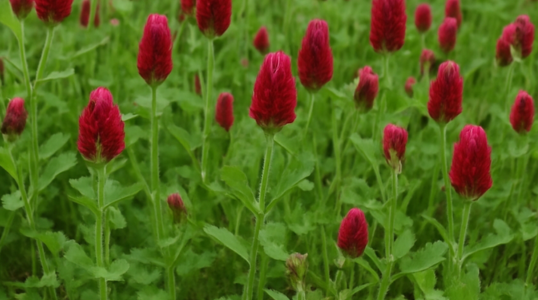
→ Mid-season annual crimson clover (Trifolium incarnatum), ~110–130 days to flowering

✔︎ Strong late-winter–spring feed; excellent quality hay/silage (dense cylindrical heads cure well)

✔︎ Broadly adapted to well-drained loams/sandy loams; suits; suits higher-rainfall and irrigated programs

Read More

✔︎ Good early spring bulk and fast recovery after grazings/cuts

Soft-seeded — low self-regeneration; plan to re-sow annually

Not suited to saline or prolonged waterlogged sites; avoid heavy depressions

Establishment can be checked by RLEM/snails/slugs; monitor early


Compatible pasture plants

Compatible with many annual and perennial temperate grasses.

Grasses: Annual/Italian ryegrass, Perennial ryegrass (irrigated/high rainfall), Tall fescue, Cocksfoot, Oats/Ryecorn for silage.

Legumes: Balansa/Persian on wetter flats; Sub clover on drier microsites; White clover in high-rainfall/irrigated areas.

Notes:

— In comparison: vs Balansa = earlier, faster bulk for cut-and-graze, but less waterlogging tolerance/regeneration; vs Persian = earlier, shorter window with poorer flood tolerance, better for hay/silage; vs Sub clover = higher early spring feed on well-drained loams, but softer seedbank and less suited to dry acid sands.
— Sow shallow (≈5–10 mm) into a firm, moist seedbed.
— Inoculation: Group C rhizobia (clover group).
— Fertility: Ensure P & S; monitor K & Mo on lighter soils, especially after hay cuts.
— Grazing: Begin when well anchored (pull-test). Rotate to maintain leaf; defer at flowering if seed set/regeneration is desired.

White Clover

→ Perennial stoloniferous clover (Trifolium repens)

✔︎ Small–medium leaf type with strong stolon development for persistence under close grazing

✔︎ Better heat tolerance than most temperate cultivars

Read More

✔︎ Reliable reseeding and dense ground cover

Lower peak spring yield than large-leaf or ladino-type cultivars

Persistence limited by prolonged drought or hot summer conditions

Less cold-tolerant than small-leaf cool-temperate cultivars


Compatible pasture plants

Compatible with many temperate and subtropical grasses.

Grasses:

Temperate and Tableland areas: Perennial Ryegrass, Phalaris, Cocksfoot, Tall Fescue.
South Coast and Western Irrigated areas: Perennial Ryegrass, Italian Ryegrass, Paspalum, Kikuyu.
Central and North Coast: Kikuyu, Setaria, Rhodes Grass, Perennial Ryegrass, Italian Ryegrass.

Legumes:

Red Clover, Subterranean Clover, Arrowleaf Clover, Persian Clover.

Notes:

— In comparison: vs ladino (large-leaf) = better persistence under close grazing/heat, but lower peak spring yield; vs very small-leaf cool-temperate whites = better heat/summer tolerance, but less cold tolerance; vs sub clover = perennial N supply and summer activity (irrigated/high rainfall) but less suited to very dry, summer-dry systems.
— Sow shallow (5–10 mm) into a firm, moist seedbed.
— Inoculation: Group C (clover) rhizobia.
— Ensure P & S; monitor K & Mo on lighter/acid soils; lime if pH(CaCl₂) < 5.2–5.5.                                                                           — Around 25–35 day cutting/grazing interval; avoid grazing below 4–5 cm to protect stolons and crowns.

Rose Clover

→ Mid–late season annual rose clover (Trifolium hirtum)

✔︎ Hard-seeded with good regeneration; suited to lighter-textured, lower-fertility soils and Mediterranean seasons.

✔︎ Reliable late-winter–spring feed; strong spring flush where sub clover struggles

Read More

✔︎ Can fit lower–medium rainfall districts; practical guide ~350 mm+

Dislikes “wet feet” — not suited to waterlogged or heavy depressions

Sensitive to heavy grazing/cutting around flowering — can reduce seed set and persistence

Broadleaf herbicide options are limited; manage weeds pre-sowing and early


Compatible pasture plants

Compatible with many annual and perennial temperate grasses.
Grasses: Annual/Italian ryegrass, rye-corn/oats for winter feed or silage; Perennial ryegrass or Tall fescue on better moisture sites.
Legumes: Subterranean clover on better loams; medics on neutral–alkaline rises.

Notes:

— In comparison: vs Sub clover = tougher on lighter, drier sands with a later spring flush, but poorer on wet flats; vs Balansa/Persian = better on well-drained, lower-fertility sands/duplex, but less waterlogging tolerant; vs Medics = similar low–medium rainfall fit, rose clover suits slightly more acidic sands than many medics.

— Sow shallow (5–10 mm) into a firm, moist seedbed.
— Group C rhizobia (clover group) 
— Ensure P & S; watch K on light sands.
— Rotationally graze through winter; defer grazing at flowering to maintain the seedbank.

Persian Clover

→ Late-season annual Persian clover (Trifolium resupinatum var. majus), Late flowering

✔︎ High winter–spring feed and excellent hay/silage quality (erect, hollow stems cure well)

✔︎ Tolerates partial waterlogging and mild salinity; adapted to neutral–alkaline soils

Read More

✔︎ Clover scorch resistant; suited to irrigated/long-season districts

Soft-seeded — low self-regeneration; generally plan as a 1-year ley (re-sow)

Requires a spring spell — continuous grazing at flowering will prevent regeneration

Less suited to deep sands or low-fertility, very dry sites; establishment can be checked by RLEM/snails/slugs


Compatible pasture plants

Compatible with many annual and perennial temperate grasses.

Grasses: Perennial Ryegrass, Annual/Italian Ryegrass, Phalaris, Cocksfoot, Tall Fescue.

Legumes: Subterranean Clover (on drier ridges), Balansa Clover (on wetter flats), White Clover in higher-rainfall or irrigated areas.

Notes:

— In comparison: vs Lightning (mid-season Persian) = later, longer spring and bigger hay/silage window, but slower early feed; vs Prolific (hard-seeded Persian) = higher-quality cut-and-graze in long seasons but much poorer regeneration; vs shaftal/common early–mid Persians = later and more erect with better late-spring bulk under irrigation.
— Sow shallow (5–10 mm) into a firm, moist seedbed.
— Inoculation: Group O rhizobia (Persian clover).
— Ensure P & S; monitor K & Mo on lighter soils.
— Rotationally graze through winter; defer grazing at flowering (Sept–Oct) to maintain the seedbank where some regeneration is desired.
— Later and more erect than Prolific (hard-seeded, regenerating type); later than Lightning (mid-season) and shaftal ranges; best where long seasons/irrigation favour late hay/silage.

→ Mid-season annual Persian clover (Trifolium resupinatum var. majus), Mid flowering

✔︎ Fast establishment and strong early–mid winter growth

✔︎ Suits medium-rainfall districts; good hay/silage option

Read More

✔︎ Handles partial waterlogging; tolerates mild salinity

Soft-seeded — low self-regeneration; generally plan as a 1-year ley (re-sow)

Not tolerant of continuous grazing through flowering

Drainage still matters — risk of crown/root rots on wet, heavy soils


Compatible pasture plants

Compatible with many annual and perennial temperate grasses.

Grasses: Perennial Ryegrass, Annual/Italian Ryegrass, Phalaris, Cocksfoot, Tall Fescue.

Legumes: Subterranean Clover (on drier ridges), Balansa Clover (on wetter flats), White Clover in higher-rainfall or irrigated areas.

Notes:

— In comparison: vs Laser (late Persian) = earlier, quicker early feed but shorter spring/hay window; vs Prolific (hard-seeded Persian) = better cut-and-graze quality in mid seasons but far poorer regeneration; vs Balansa = earlier feed on well-drained loams but less waterlogging tolerance/regeneration.
— Sow 5–10 mm deep.
— Inoculation: Group O rhizobia.
— Ensure P & S; monitor K & Mo on lighter soils.
— Rotational winter grazing; spring spell for any regeneration.

→ Early–mid season annual Persian clover (Trifolium resupinatum var. resupinatum)

✔︎ Hard-seeded — good self-regeneration from soil seed bank

✔︎ Semi-prostrate habit tolerates close grazing better than erect types

Read More

✔︎ Performs on winter-wet flats and can handle mild salinity

Not as erect for hay/silage as majus types (Laser/Lightning)

Seedling growth can be slower in cold early breaks

Disease (e.g., rust) can build under back-to-back Persian crops


Compatible pasture plants

Compatible with many annual and perennial temperate grasses.

Grasses: Perennial Ryegrass, Annual/Italian Ryegrass, Phalaris, Cocksfoot, Tall Fescue.

Legumes: Subterranean Clover (on drier ridges), Balansa Clover (on wetter flats), White Clover in higher-rainfall or irrigated areas.

Notes:

— In comparison: vs Laser/Lightning (majus) = earlier and more grazing-tolerant with strong regeneration, but less erect for hay/silage; vs Balansa = better grazing tolerance on well-drained loams, but less waterlogging tolerance; vs Sub clover = stronger regeneration in neutral–alkaline, winter-wet flats, but shorter persistence on dry acid sands.
— Sowing depth, 5–10 mm into a firm, moist seedbed.
— Inoculation: Group O rhizobia.
— Ensure P & S; monitor K & Mo on lighter soils.
— Rotationally graze; defer at first flower in Year 1 to bank hard seed for regeneration.

→ Mid–late to Late season annual Persian clover (Trifolium resupinatum var. majus), Late-leaning flowering

✔︎ Erect, hollow stems — very good hay/silage curing and quality

✔︎ Excellent waterlogging tolerance; suits heavier, irrigated or seasonally wet soils

Read More

✔︎ High winter–spring feed in long seasons

Very soft-seeded (often ~1–2%) — poor regeneration; plan to re-sow annually

Continuous grazing through flowering prevents seed set

Less suited to deep sands/low fertility; establishment checks from RLEM/snails/slugs


Compatible pasture plants

Compatible with many annual and perennial temperate grasses.

Grasses: Perennial Ryegrass, Annual/Italian Ryegrass, Phalaris, Cocksfoot, Tall Fescue.

Legumes: Subterranean Clover (on drier ridges), Balansa Clover (on wetter flats), White Clover in higher-rainfall or irrigated areas.

Notes:

— In comparison: vs Laser (late Persian) = broadly similar hay/silage role but often softer-seeded with poorer stand carry-over; vs Lightning (mid Persian) = later, bigger hay window but slower early feed and lower regeneration; vs Prolific (var. resupinatum) = far less regenerative/softer-seeded, but more erect for hay.
— Sowing depth, 5–10 mm into a firm, moist seedbed.
— Inoculation: Group O rhizobia.
— Ensure P & S; monitor K & Mo on lighter soils.
— Rotational winter grazing; spell at flowering to set any seed (expect to re-sow most years).

→ Late to very late-season annual Persian clover (Trifolium resupinatum), very late/multi-cut type

✔︎ Excellent recovery from grazing or harvest — strong fit for multi-graze/multi-cut systems

✔︎ Excellent seedling establishment and winter growth; highly digestible forage

Read More

✔︎ Suits long seasons and wet winters; good frost tolerance and waterlogging tolerance

Low hard seed — limited natural carry-over; plan to re-sow most years if you want it back

Continuous grazing through flowering reduces seed set and any chance of persistence

Later first feed than mid-season Persians; needs a longer season to fully pay off


Compatible pasture plants

Compatible with many annual and perennial temperate grasses.

Grasses: Perennial Ryegrass, Annual/Italian Ryegrass, Phalaris, Cocksfoot, Tall Fescue.

Legumes: Subterranean Clover (on drier ridges), Balansa Clover (on wetter flats), White Clover in higher-rainfall or irrigated areas.

Notes:

— In comparison: vs Laser (late Persian) = similar late hay/silage and grazing role; Turbo is positioned as very late/multi-cut with strong recovery; vs Lightning (mid Persian) = Turbo is later with a bigger late-season window but generally later first feed; vs hard-seeded Persian = Turbo is less regenerative but better suited to multi-cut/multi-graze in long, wet-winter seasons.

— Sowing depth, 5–10 mm into a firm, moist seedbed.
— Inoculation: Group O rhizobia.
— Ensure P & S; monitor K & Mo on lighter soils.

— Rotational winter grazing; spell at flowering to set any seed (expect to re-sow most years).
Strawberry Clover

→ Perennial stoloniferous clover (Trifolium fragiferum)

✔︎Salt, waterlogging & alkaline-soil tolerant (suited to saline/wet paddocks)

✔︎ Handles heavy grazing once runners are established (often outlasts white clover)

Read More

✔︎ Useful in saline mixes with tall wheatgrass/puccinellia; good hay/silage component

Occasional oestrogenic effects — avoid grazing breeding animals near joining

Slow establishment & low winter growth (protect seedlings; watch mites)

Summer production relies on moisture; less salt-tolerant than tall wheatgrass/puccinellia


Compatible pasture plants

Compatible with many temperate and saline-tolerant grasses.

Grasses:

Saline/wet sites:Tall Wheatgrass, Puccinellia, Saltwater Couch

Temperate mixes: Perennial Ryegrass, Phalaris, Cocksfoot, Tall Fescue, Paspalum

Legumes:

Subterranean Clover, Arrowleaf Clover, Persian Clover.

Notes:

— In comparison, vs white clover = far better salinity/waterlogging tolerance, but slower winter growth, vs red clover = more persistent on wet/saline flats, but less summer bulk, vs sub clover = perennial option for saline/wet sites, but slower to establish and needs higher residuals
— Sowing depth, 5–10 mm into a firm, moist seedbed
— Inoculation: Group B (clover) rhizobia
— Fertility, maintain P, K, S, lime if pH(CaCl₂) < 5.2–5.5, monitor Mo if deficient
— Grazing, keep residuals ≥7 cm to protect stolons/crowns, rotate (avoid set-stocking), allow seed set in Year 1
— Valuable component of salt-affected or waterlogged pastures

Gland Clover

→ Mid-season annual gland clover (Trifolium glanduliferum), ~110–125 days to flowering

✔︎ Hard-seeded with reliable regeneration in ley rotations; handles false breaks better than soft-seeded clovers

✔︎ Suits heavier, seasonally wet flats — good tolerance of short-term waterlogging; fits neutral to mildly alkaline loams/clays

Read More

✔︎ Glandular, sticky foliage can reduce feeding by small pests (e.g. RLEM) compared with many other annual clovers

Less suited to deep, infertile sands — prefers loams/clays with reasonable fertility

Requires a spring spell at flowering — continuous grazing then will reduce regeneration

No silver bullet for pests or weeds; broadleaf herbicide options are limited during establishment


Compatible pasture plants

Compatible with many annual and perennial temperate grasses.
Grasses: Annual/Italian ryegrass, Perennial ryegrass (higher rainfall/irrigation), Tall fescue, Cocksfoot.
Legumes: Balansa (on wetter flats), Subterranean clover on slightly drier microsites, Persian clover in irrigated/higher-rainfall paddocks.

Notes:

— In comparison: vs balansa = less early bulk but similar wet-flat fit with stronger hard-seed carry-over, vs Persian (Laser/Lightning) = more persistent (hard-seeded) but less erect for hay, vs French serradella = better on neutral–alkaline, heavier soils (serradella suits acid sands), vs sub clover = more at home on seasonally wet/heavier clays while sub suits better-drained sites.
— Sow shallow (5–10 mm) into a firm, moist seedbed; roll if fluffy.
— Inoculation: Group C rhizobia.
— Ensure P & S; monitor K and Mo on lighter soils.
— Rotationally graze through winter; defer at flowering (Sept–Oct) to maintain the seedbank.
— Where it sits versus other annual clovers: earlier winter bulk is usually behind Cadiz-type French serradella and some Persian types, but Prima is more persistent than soft-seeded options and is more at home than sub clover on seasonally wet, heavier soils.

Red Clover Diploids

→ Mid–late maturing diploid (Trifolium pratense)

✔︎ High total yield and strong spring–summer growth

✔︎ Improved persistence (up to 4 years) compared with traditional red clover types

Read More

✔︎ Production suitable for grazing hay or silage

Oestrogens present — avoid grazing breeding animals near joining

Less winter-active than early maturing types

Sensitive to waterlogging; crown rot risk in humid/wet soils


Compatible pasture plants

Compatible with many temperate and subtropical grasses.

Grasses:

Temperate and Tableland areas: Perennial Ryegrass, Phalaris, Cocksfoot, Tall Fescue.
South Coast and Western Irrigated areas: Perennial Ryegrass, Italian Ryegrass, Paspalum, Kikuyu.
Central and North Coast: Kikuyu, Setaria, Rhodes Grass, Perennial Ryegrass, Italian Ryegrass.

Legumes:

Subterranean Clover, Arrowleaf Clover, Persian Clover.

Notes:

— In comparison: vs early red clovers = later finish with more late-spring/summer yield but slower early winter start, vs late red clovers = slightly earlier, quicker recovery but shorter late hay/silage window, vs tetraploid reds = better persistence under grazing/finer stems for curing but slightly lower peak yield per cut.
— Sowing depth, 5–10 mm into a firm, moist seedbed
— Inoculation: Group C (clover) rhizobia
— Fertility, maintain P, K, S, lime if pH(CaCl₂) < 5.2–5.5, monitor Mo if deficient
— Grazing/cutting, keep rotations to ~30–40 days, rest after flowering, maintain cut/graze height ≥7 cm to protect crowns and longevity

→ Mid–late maturing diploid (Trifolium pratense)

✔︎ High total dry matter yield — strong spring and summer production

✔︎ Widely adapted — performs from cool temperate to coastal subtropical zones

Read More

✔︎ Excellent silage and hay quality; leafy and palatable

Higher oestrogen than modern low-oestrogen reds — avoid grazing breeding animals near joining

Less winter-active than early maturing types

Shorter persistence (often ~1–2 years) compared with selected long-persisting reds


Compatible pasture plants

Compatible with many temperate and subtropical grasses.

Grasses:

Temperate and Tableland areas: Perennial Ryegrass, Phalaris, Cocksfoot, Tall Fescue.
South Coast and Western Irrigated areas: Perennial Ryegrass, Italian Ryegrass, Paspalum, Kikuyu.
Central and North Coast: Kikuyu, Setaria, Rhodes Grass, Perennial Ryegrass, Italian Ryegrass.

Legumes:

Subterranean Clover, Arrowleaf Clover, Persian Clover.

Notes:

— In comparison, vs early red clovers = later finish with more late-spring/summer yield, slower early winter start, vs late red clovers = similar timing but generally less winter activity, vs tetraploid reds = typically finer stems/easier curing but lower peak yield per cut, vs modern low-oestrogen reds (e.g., Redquin/Renegade) = higher oestrogen risk and often shorter stand life.
— Sowing depth, 5–10 mm into a firm, moist seedbed
— Inoculation: Group C (clover) rhizobia
— Fertility, maintain P, K, S, lime if pH(CaCl₂) < 5.2–5.5, monitor Mo if deficient
— Grazing/cutting, 30–40 day interval, rest after flowering, maintain cut/graze height ≥7 cm to protect crowns and longevity

Snail Medic

→ Early–mid season annual snail medic (Medicago scutellata)

✔︎ Rapid establishment and strong winter–spring feed; excellent quality hay/silage

✔︎ Suits neutral–alkaline, well-drained loams/clays in low–medium rainfall zones (~300–550 mm)

Read More

✔︎ Produces abundant seed under good springs (useful if spelled)

Lower persistence than hard-seeded barrel/strand medics — usually re-sown if continuously grazed at flowering

Not suited to acidic, saline, or waterlogged paddocks

Susceptible to establishment pests (RLEM, lucerne flea) and aphids — monitor and treat early


Compatible pasture plants (annual forage mixes)

Neutral–alkaline loams/clays: Sava + annual/Italian ryegrass (moderate) or cereals (oats/ryecorn) for winter bulk.
Mixed medic program: Sava (quick early feed) + a hard-seeded barrel/strand medic (e.g., Paraggio/Jemalong/Herald) to improve regeneration.
Silage/hay focus: Sava + Italian ryegrass; manage a spring spell to secure seed if some carry-over is desired.

Notes:

— In comparison, vs barrel/strand medics (e.g., Paraggio/Herald) = quicker early feed but softer seed and poorer regeneration, vs Cheetah/Sephi (barrel) = earlier and better for hay in mid seasons but less aphid resistance/persistence, vs sub clover = better on neutral–alkaline loams/clays in drier belts, but poorer on acid sands and wet flats
— Sowing depth, 5–10 mm into a firm, moist seedbed
— Inoculation: Group AM (annual medics), strain WSM1115
— Fertility, ensure P & S, maintain K on lighter soils
— Grazing, begin once well anchored (pull test), rotate through winter, defer at flowering to bank seed if aiming for regeneration

Arrowleaf Clover

→ Mid–late to late-season annual arrowleaf clover (Trifolium vesiculosum)

✔︎ Extends grazing 4–8+ weeks into early summer; excellent late spring/early summer growth from deep roots (to ~1–1.5 m)

✔︎ High hard-seed level → good self-regeneration under managed seed set

Read More

✔︎ Tall, erect, hollow stems — good hay/silage option

Poor winter dry-matter — pair with earlier annuals for early feed

Intolerant of poorly drained/saline soils; prefers well-drained profiles

Needs a spring spell — continuous grazing at flowering reduces seedbank and persistence


Compatible pasture plants

Compatible with many annual and perennial temperate grasses.

Grasses: Perennial Ryegrass, Annual/Italian Ryegrass, Phalaris, Cocksfoot, Tall Fescue.

Legumes: Sub clover (drier ridges), Persian/balansa (wet flats), white clover in higher-rainfall/irrigated areas.

Notes:

— In comparison: vs Seelu (late, public) = similar maturity window; Zulu II typically higher hard-seed % and better carry-over, vs Persian/Berseem = later, longer spring but lower winter feed and poorer flood tolerance, vs sub clover = adds 4–8+ weeks of late feed in long seasons but less winter activity and poorer waterlogging tolerance.
— Sowing depth 5–10 mm into a firm, moist seedbed.
— Inoculation: Group C rhizobia.
— Fertility ensure P & S, monitor K & Mo on lighter soils.
— Grazing rotate through winter, defer at first flower in Year 1 to bank hard seed and maintain regeneration.

Temperate Grasses

Cocksfoot

→ Summer-active perennial cocksfoot (Dactylis glomerata)

✔︎ High total annual yield with strong spring–summer activity; strong winter growth for a cocksfoot

✔︎ Excellent seedling vigour and rapid establishment; upright, clover-friendly habit

Read More

✔︎ Later heading and good disease tolerance

Prefers higher rainfall; performance drops in drier districts

Upright habit can get rank if spring rotations are lax — manage canopy

Not suited to prolonged waterlogging


Compatible pasture plants

Compatible with many annual and perennial temperate grasses.

Grasses: Perennial Ryegrass, Annual/Italian Ryegrass, Phalaris, Tall Fescue.
Legumes: Subterranean Clover (on lighter/drier microsites), Balansa/Persian Clover (on better-moisture flats), Medics on alkaline rises.

Notes:

— In comparison: vs Savvy tougher in summer but less soft/leafy (earlier heading); vs Megatas more balanced cool-season growth but less summer leaf and more aftermath heading; vs Currie softer/leafier with later heading; vs Uplands more green summer feed but less drought-dormant.

— Sow shallow (5–15 mm) into a firm, moist seedbed (Autumn)
— Responds to N after establishment; maintain P & K
— Graze once well anchored (pull test); keep 2–4-leaf rotations to avoid rank spring growth

→ Mediterranean-type perennial cocksfoot (Dactylis glomerata)

✔︎ Better summer–autumn rebound in dry zones than softer, winter-leaning cocksfoots — responds fast after summer rain

✔︎ Earlier spring start/longer warm-season window — tends to out-produce later-heading types in late spring–summer

Read More

✔︎ Strong seedling vigour — generally establishes quicker than many mid-dormant/older cocksfoot lines

Coarser, earlier-heading than soft-leaf types — goes stemmy faster if spring rotations slip

More clover shading under lenient grazing vs open, soft-leaf cultivars — keep rotations tight

No advantage on wet/heavy ground — like most cocksfoot, performs poorly under prolonged


Compatible pasture plants

Compatible with many annual and perennial temperate grasses.

Grasses: Perennial Ryegrass, Annual/Italian Ryegrass, Phalaris, Tall Fescue.
Legumes: Subterranean Clover (on lighter/drier microsites), Balansa/Persian Clover (on better-moisture flats), Medics on alkaline rises.

Notes:

— In comparison: vs Savvy tougher in summer but coarser/earlier if rotations slip; vs Megatas steadier year-round but less leafy in summer with more aftermath heading; vs Uplands more green summer feed but less drought-dormant.

— Sow shallow (5–15 mm) into a firm, moist seedbed (Autumn)
— Responds to N after establishment; maintain P & K
— Graze once well anchored (pull test); stay on top of spring rotations to limit stem/seedhead carry-over into summer

→ Tetraploid, soft-leaf perennial cocksfoot (Dactylis glomerata)

✔︎ Tetraploid with excellent seedling vigour and a low, densely tillered crown (quick establishment; strong recovery)

✔︎ Highly summer-active with leafy, high-quality feed through the warm season

Read More

✔︎ Little or no aftermath heading, helping maintain summer quality after first heading

Mid-winter growth only moderate in colder districts — blend accordingly

Can coarsen if spring rotations slip — manage canopy to keep it leafy

Not suited to prolonged waterlogging — best on well-drained soils


Compatible pasture plants

Compatible with many annual and perennial temperate grasses.

Grasses: Perennial Ryegrass, Annual/Italian Ryegrass, Phalaris, Tall Fescue.
Legumes: Subterranean Clover (on lighter/drier microsites), Balansa/Persian Clover (on better-moisture flats), Medics on alkaline rises.

Notes:

— In comparison: vs Savvy more summer leaf and lower aftermath heading, but lighter in mid-winter; vs Yarack higher summer quality but less steady winter balance; vs Uplands far more green summer feed but less drought-survival.

— Sow shallow (5–15 mm) into a firm, moist seedbed (Autumn)
— Responds to N after establishment; maintain P & K
— Graze once well anchored (pull test); maintain 3–4-leaf stage and top quickly if heading escapes

→ Hispanica-type perennial cocksfoot (Dactylis glomerata ssp. hispanica)

✔︎ Drought-leaning hispanica type; persists from ~350 mm+ with summer semi-dormancy

✔︎ Compact, densely tillered, fine-leaf habit; better animal acceptance than older hispanica lines

Read More

✔︎ Good summer survival on lighter soils where ryegrass thins

Slower early establishment — control weeds and be patient in early growth stages

Summer dormancy reduces green pick without summer rain/irrigation

Not suited to heavy, waterlogged clays


Compatible pasture plants

Compatible with many annual and perennial temperate grasses.

Grasses: Perennial Ryegrass, Annual/Italian Ryegrass, Phalaris, Tall Fescue.
Legumes: Subterranean Clover (on lighter/drier microsites), Balansa/Persian Clover (on better-moisture flats), Medics on alkaline rises.

Notes:

— In comparison: vs Aurus/Savvy/Megatas tougher under drought with more summer dormancy but less green summer feed; vs Yarack/Currie more drought-leaning but slower to establish and more winter-biased reduction.

— Sow shallow (5–15 mm) into a firm, moist seedbed (Autumn)
— Responds to N after establishment; maintain P & K (watch S on lighter soils)
— Graze once well anchored (pull test); keep 3–4-leaf rotations (light grazings only in Year 1)

Phalaris

→ Winter-dormant type phalaris (Phalaris aquatica)

✔︎ Autumn–spring biased production with reduced mid-winter growth

✔︎ Persistence in dry summers, plus deep roots give excellent drought carry-over

Read More

✔︎ Fits mixed-farming systems in lower–medium rainfall belts; reliable base grass where winters are cool and summers harsh

Older genetics with higher alkaloid risk than modern low-alkaloid lines — manage grazing introductions and animal health accordingly

Crown vulnerability in dormancy — hard set-stocking or heavy traffic during summer dormancy can thin plants

Seed-to-seed variability (being an older public cultivar) can mean more variable performance compared with newer, tightly selected lines


Compatible pasture plants

Compatible with many annual and perennial temperate grasses.

Grasses: Perennial Ryegrass, Annual/Italian Ryegrass, Cocksfoot.
Legumes: Subterranean Clover (on lighter/drier microsites), White/Strawberry Clover on heavier/wetter ground; Medics on alkaline rises.

Notes:

— In comparison: vs winter-active phalaris (e.g., Holdfast/GT) = tougher summer survival but less winter growth/green summer feed; vs modern low-alkaloid lines = higher alkaloid risk; vs perennial ryegrass = better summer persistence but lower winter growth in cold districts.

— Sow shallow (5–15 mm) into a firm, moist seedbed (Autumn)
— Responds to N after establishment; maintain P & K (watch S on lighter soils)
— Graze once well anchored (pull test); allow occasional seed-set to enhance longevity. (Seed-guide practice.)

→ Winter-active phalaris cultivar (Phalaris aquatica)

✔︎ Winter-active with low–moderate summer dormancy; strong cool-season production; good persistence when rotationally grazed

✔︎ Benchmark winter-active type (similar to Sirosa/Sirolan) with improved seed retention at maturity

Read More

✔︎ Tolerates moderately acid soils compared with older lines

Medium seedling vigour — establishment is not as quick as the most vigorous alternatives

Alkaloids can still be a risk in stressed/old stands

Low–moderate summer dormancy means little summer green pick in dry years (will brown off)


Compatible pasture plants

Compatible with many annual and perennial temperate grasses.

Grasses: Perennial Ryegrass, Annual/Italian Ryegrass, Cocksfoot.
Legumes: Subterranean Clover (on lighter/drier microsites), White/Strawberry Clover on heavier/wetter ground; Medics on alkaline rises.

Notes:

— In comparison: vs Holdfast GT better suited to rotational systems (GT holds better under heavier set-stocking); vs Confederate/low-alkaloid lines similar winter growth but higher alkaloid risk; vs Australian (winter-dormant) more winter growth but less summer survival; vs perennial ryegrass better summer persistence but usually slower establishment.

— Sow shallow (5–15 mm) into a firm, moist seedbed (Autumn)
— Responds to N after establishment; maintain P & K (watch S on lighter soils)
— Graze once well anchored (pull test); allow occasional seed-set to enhance longevity. (Seed-guide practice.)

→ Winter-active type phalaris (Phalaris aquatica)

✔︎ High winter and early-spring growth; strong shoulder-season feed compared with semi-dormant types

✔︎ Deep-rooted, persistent perennial for loam to clay-loam soils; tolerates short periods of wet feet better than ryegrass

Read More

✔︎ Suited to HRZ: performs best from ~600–900 mm (cool/wet pockets can push higher with good management)

Needs active grazing in late spring to prevent rank, stemmy growth (quality drops if canopy isn’t controlled)

Animal health: phalaris alkaloids can be a risk around the break/first frosts — use low-alkaloid seed sources and follow local grazing advice

Establishment is slower than ryegrass — keep weeds down and graze lightly in Year 1. (General establishment guidance.)


Compatible pasture plants

Compatible with many annual and perennial temperate grasses.

Grasses: Perennial Ryegrass, Annual/Italian Ryegrass, Cocksfoot.
Legumes: Subterranean Clover (on lighter/drier microsites), White/Strawberry Clover on heavier/wetter ground; Medics on alkaline rises.

Notes:

— In comparison: vs Holdfast very similar agronomy but Holdfast has improved seed retention (and often better acid tolerance); vs Holdfast GT less tolerant of heavy set-stocking; vs Australian (winter-dormant) more winter growth but less summer survival; vs low-alkaloid lines (e.g., Confederate) generally higher alkaloid risk.

— Sow shallow (5–15 mm) into a firm, moist seedbed (Autumn)
— Responds to N after establishment; maintain P & K (watch S on lighter soils)
— Graze once well anchored (pull test); allow occasional seed-set to enhance longevity. (Seed-guide practice.)

Brome Grass

→ Short-lived perennial pasture brome (Bromus valdivianus)

✔︎ Selected in NZ for persistence under grazing and high summer forage, with very palatable feed and strong cool-season growth

✔︎ Regenerates well from seed if allowed to set periodically — can maintain density in mixes despite 2–3-year plant lifespan

Read More

✔︎ More tolerant of Argentine stem weevil

Doesn’t tolerate waterlogging; needs moderate–high fertility for best performance

Can thin without recruitment — must allow spring seed set at intervals

In lower-rainfall or summer-dry seasons plants can behave more annual-like unless summer rain/irrigation supports carry-over


Compatible pasture plants

Compatible with many annual and perennial temperate grasses.

Grasses: Perennial/Annual/Italian ryegrasses (good fit). Avoid sowing alongside slow-establishing phalaris, cocksfoot or tall fescue at full rates (brome’s early vigour can suppress them).
Legumes: Subterranean & white clovers, lucerne, red clover.

Notes:

— In comparison: vs Prairie grass (Bromus willdenowii) = Bareno is slower to establish but holds better under grazing if you allow periodic seed set; prairie grass gives faster early/winter feed and very soft leaf but is shorter-lived without reseeding.
vs Grazing brome types = Bareno tends to give softer, higher-quality winter feed and is easier to keep leafy; grazing-type bromes can push a bit more summer bulk when moisture arrives but are coarser and can open up if not rotated.
vs Annual bromes (soft/rescue, etc.) = Bareno is a true perennial phase that can self-recruit when spelled; annual bromes bolt/head quickly, giving a brief flush but poor persistence/quality later in spring.

— Sow 10 – 20 mm (no more than 25 mm) into a firm, moist autumn seedbed; ensure good seed-soil contact. (Depth consistent with temperate grass practice.)
— Graze first entry only after the pull test and ≥4 tillers; aim for 2–3-leaf grazings in winter and leave ~5–7 cm residual.
— Spell in spring periodically to allow seed set and refresh the stand (key to holding density beyond 2–3 years).

→ Gala grazing brome (Bromus stamineus) — winter-active perennial brome for tougher, summer-dry environments

✔︎ Perennial ryegrass alternative in harsh conditions — winter active, highly productive, densely tillered

✔︎ Persistent under hard grazing and harsh climatic conditions; more persistent than prairie grass

Read More

✔︎ Drought tolerant with strong autumn recovery; good fit with cocksfoot on slightly acidic, well drained soils

Establishment speed and best sowing method for Gala not specified in the available sources

Not a tall “shut-up” grass — shouldn’t be locked up expecting tall covers/big bulk; manage it more like a ryegrass-style grazing sward

Establishment can be slow (especially in cool soils) and early yields can lag


Compatible pasture plants

Compatible with many annual and perennial temperate grasses.

Grasses: Perennial/Annual/Italian ryegrasses (good fit). Avoid sowing alongside slow-establishing phalaris, cocksfoot or tall fescue at full rates (brome’s early vigour can suppress them).
Legumes: Subterranean & white clovers, lucerne, red clover.

Notes:

— In comparison: vs perennial ryegrass = positioned as a more suitable option in harsh conditions; vs prairie grass = more persistent under hard grazing/harsh climate; vs Bareno pasture brome = earlier flowering (Bareno is described as flowering 19 days later than Gala)

— Sow 10 – 20 mm (no more than 25 mm) into a firm, moist autumn seedbed; ensure good seed-soil contact. (Depth consistent with temperate grass practice.)
— Graze first entry only after the pull test and ≥4 tillers; aim for 2–3-leaf grazings in winter and leave ~5–7 cm residual.
— Spell in spring periodically to allow seed set and refresh the stand (key to holding density beyond 2–3 years).

Short-term/Italian

→ Mid–late to late-season annual arrowleaf clover (Trifolium vesiculosum) (common/public type)

✔︎ Extends grazing 4–8+ weeks into early summer in good springs; strong late spring growth from a deep root system

✔︎ Typically hard-seeded → can self-regenerate if you allow seed set periodically

Read More

✔︎ Tall, erect, hollow stems — can be used for hay/silage as well as grazing

Lower winter dry matter — pair with earlier annuals (sub clover/early medics/annual ryegrass) for winter feed

Prefers well-drained soils; performs poorly on waterlogged (and often saline) sites

Needs a spring spell — continuous grazing through flowering reduces seed set and future regeneration


Compatible pasture plants

Compatible with many annual and perennial temperate grasses.

Grasses: Perennial ryegrass, Annual/Italian ryegrass, Phalaris, Cocksfoot, Tall fescue.
Legumes: Sub clover (drier ridges), Persian/Balansa (wetter flats), White clover in higher rainfall/irrigated areas.

Notes:

— In comparison: vs Zulu = similar mid–late to late maturity and hay/grazing role; “common” types can have less hard seed and weaker carry-over than improved lines depending on seed lot and management. vs Persian/Berseem = arrowleaf is later/longer spring feed but generally less winter feed and poorer fit on wet flats. vs Sub clover = arrowleaf adds valuable late feed in long seasons but is less winter-active and needs spring spelling to bank seed.

— Sowing depth 5–10 mm into a firm, moist seedbed.
— Inoculation: Group C rhizobia.
— Fertility: ensure P & S; monitor K & Mo on lighter soils.
— Grazing: rotate through winter; defer at first flower (especially Year 1) to bank hard seed and maintain regeneration.

Tall Fescue

→ Continental (summer-active) tall fescue (Festuca arundinacea)

✔︎ Traditional continental type with growth in spring–summer–autumn; suited to high-rainfall temperate districts

✔︎ Erect, densely-tillered habit with good mid-summer growth where moisture is available

Read More

✔︎ Tolerates periods of set-stocking better than many perennials

Best in higher rainfall; performance drops in drier zones without irrigation or summer rain

Can get rank if rotations are lax — manage canopy heading

Needs moderate–high fertility — quality and persistence drop under low N/P


Compatible pasture plants

Compatible with many annual and perennial temperate grasses.

Grasses: Perennial Ryegrass, Annual/Italian Ryegrass, Phalaris, Cocksfoot.
Legumes: Subterranean Clover (on lighter/drier microsites), Balansa/Persian Clover (on better-moisture flats), Medics on alkaline rises.

Notes:

— In comparison: vs Mediterranean (winter-active) fescues = more summer growth but less drought dormancy; vs perennial ryegrass = better summer persistence and wet-foot tolerance, but needs careful spring grazing to prevent rank feed.

— Sow shallow (5–15 mm) into a firm, moist seedbed (Autumn)
— Responds to N after establishment; maintain P & K (watch S on lighter soils)
— Graze once well anchored (pull test); avoid rank, stemmy carry-over into summer.

→ Mediterranean (summer-dormant, winter-active) tall fescue (Festuca arundinacea)

✔︎ Summer-dormant, deep-rooted type for persistence through hot, dry summers; quick recovery with autumn rains

✔︎ Strong winter–spring production; bred for denser tillering

Read More

✔︎ Nil endophyte

Less green pick through summer (dormant) unless irrigated or summer rain occurs

Slower to establish than ryegrass — keep weeds down and graze lightly in Year 1

Crown is vulnerable if overgrazed/trafficked during dormancy — leave residual


Compatible pasture plants

Compatible with many annual and perennial temperate grasses.

Grasses: Perennial Ryegrass, Annual/Italian Ryegrass, Phalaris, Cocksfoot.
Legumes: Subterranean Clover (on lighter/drier microsites), Balansa/Persian Clover (on better-moisture flats), Medics on alkaline rises.

Notes:

— In comparison: vs continental (summer-active) fescues = far better summer survival but less summer green feed; vs perennial ryegrass = stronger persistence through heat/dry but slower establishment; vs older Mediterranean lines = denser tillering focus for stand longevity.

— Sow shallow (5–15 mm) into a firm, moist seedbed (Autumn)
— Responds to N after establishment; maintain P & K (watch S on lighter soils)
— Graze once well anchored (pull test); light grazings only in Year 1; manage summer dormancy with timely rotations

Ryegrass Perennial

→ Early maturing perennial diploid ryegrass (Lolium perenne), heading date -17 relative to nui

✔︎ Selected from the Kangaroo Valley/Shoalhaven region ecotypes noted for persistence on coastal/tablelands NSW and tolerance of a wide range of grazing pressures; strong late-winter–spring feed

✔︎ Vigorous cool-season growth with high leaf:stem; continues into early summer under favourable conditions; reliable late-winter–spring feed under rotational grazing

Read More

✔︎ Historically used as a local ecotype/cultivar in Australia; once certified as “Kangaroo Valley” after earlier “KV Early”/“KV Late” lines were combined

Lower summer persistence and recovery than summer-active perennials (cocksfoot/phalaris) in hot, dry districts

Less suited to hot, dry inland districts and shallow, drought-prone soils; performance drops in lower rainfall without irrigation

Historically standard-endophyte lines in many stands — manage ryegrass-staggers risk with mixed swards and sensible grazing timing


Compatible pasture plants

Compatible with many annual and perennial temperate grasses.

Grasses: Annual/Italian Ryegrass (for early bulk), Perennial Ryegrass (other types in blends), Phalaris and Cocksfoot (for added summer persistence), Tall Fescue (on heavier soils).
Legumes: Subterranean Clover (standard companion on well-drained soils), White Clover (higher rainfall/irrigation), Red Clover (silage quality in moist environments), Medics (on neutral–alkaline rises).

Notes:

— In comparison: vs AusVic, earlier heading (more early feed, shorter late-spring window); vs Bolton, similar “early” class (exact offset varies by source); vs cocksfoot/phalaris, stronger winter feed but poorer summer persistence.
— Sow shallow 5–15 mm into a firm, moist autumn seedbed.
— Nitrogen after each grazing/cut to drive recovery; maintain P & K (watch S on lighter soils).
— Graze at 2.5–3 leaves; leave ~4–6 cm residual to protect rapid regrowth.
— Companion tip: commonly sown with subterranean clover; add white clover under higher rainfall/irrigation; chicory also pairs well where moisture allows.

Nui

→ Medium maturing perennial diploid ryegrass (Lolium perenne), heading date 0 (Industry standard)

✔︎ Benchmark seasonal pattern for temperate districts — reliable late-winter to spring feed under rotational grazing

✔︎ Dense tillering and good traffic tolerance; establishes readily on fertile, well-drained soils

Read More

✔︎ Suits grazing, hay and silage in reliable-moisture environments

Heads readily in spring — requires timely rotations/topping to maintain ME

Lower summer persistence/recovery than summer-active perennials (cocksfoot/phalaris) in hot, dry districts

Many legacy seedlots carry standard endophyte — manage ryegrass-staggers risk


Compatible pasture plants

Compatible with many annual and perennial temperate grasses.

Grasses: Annual/Italian Ryegrass (for early bulk), Perennial Ryegrass (other types in blends), Phalaris and Cocksfoot (for added summer persistence), Tall Fescue (on heavier soils).
Legumes: Subterranean Clover (standard companion on well-drained soils), White Clover (higher rainfall/irrigation), Red Clover (silage quality in moist environments), Medics (on neutral–alkaline rises).

Notes:

— In comparison: vs Victorian/Kangaroo Valley types, later heading (less very-early feed but a longer late-spring window); vs Bolton (−8 to Nui) Nui is later; vs soft-leaf/tetraploid PRG lines, Nui is denser/traffic-tolerant but typically less soft/leafy.
— Sow shallow 5–15 mm into a firm, moist autumn seedbed.
— Nitrogen after each grazing/cut to drive recovery; maintain P & K (watch S on lighter soils).
— Graze at 2.5–3 leaves; leave ~4–6 cm residual to protect rapid regrowth.
— Companion tip: commonly sown with subterranean clover; add white clover under higher rainfall/irrigation; chicory also pairs well where moisture allows.

→ Early maturing perennial diploid ryegrass (Lolium perenne), heading date -10 relative to nui

✔︎ Classic early-heading PRG selected for reliable late-winter–spring feed under rotational grazing

✔︎ Strong early spring growth; dense tillering and good traffic tolerance on fertile, well-drained soils

Read More

✔︎ Well proven in coastal/tableland temperate districts; commonly used as a benchmark early type

Early heading — needs tight spring rotations or topping to maintain ME and limit stem

Persistence and summer recovery lower than summer-active perennials (cocksfoot/phalaris) in hot, dry districts

Historically standard-endophyte lines in many stands — manage ryegrass-staggers risk with mixed swards and sensible grazing timin


Compatible pasture plants

Compatible with many annual and perennial temperate grasses.

Grasses: Annual/Italian Ryegrass (for early bulk), Perennial Ryegrass (other types in blends), Phalaris and Cocksfoot (for added summer persistence), Tall Fescue (on heavier soils).
Legumes: Subterranean Clover (standard companion on well-drained soils), White Clover (higher rainfall/irrigation), Red Clover (silage quality in moist environments), Medics (on neutral–alkaline rises).

Notes:

— In comparison: vs Nui (0) Victorian is earlier, giving more early feed but a shorter late-spring window; vs Kangaroo Valley broadly similar “early” class; vs soft-leaf/tetraploid PRG lines typically denser/traffic-tolerant but less soft/leafy.
— Nitrogen after each grazing/cut to drive recovery; maintain P & K (watch S on lighter soils).
— Graze at 2.5–3 leaves; leave ~4–6 cm residual to protect rapid regrowth.
— Companion tip: commonly sown with subterranean clover; add white clover under higher rainfall/irrigation; chicory also pairs well where moisture allows.

Prairie Grass

→ Short-lived perennial prairie grass (Bromus willdenowii)

✔︎ Very palatable, high-quality feed with strong cool-season production; prairie grasses are noted for excellent winter growth.

✔︎ Can persist via reseeding under the right management—allowing a more-or-less permanent stand in some systems

Read More

✔︎ Handles hard grazing better than many temperate grasses when selected for that trait (benchmark examples in the prairie group emphasise tiller density and grazing tolerance)

Typically slower to establish than ryegrass—keep weeds down and go light in Year 1

Often best treated as a 2–3-year pasture phase unless managed for reseeding; can thin without periodic seed set

Prefers fertile, well-drained soils; performance drops on poorly drained or very low-fertility paddocks


Compatible pasture plants

Compatible with many annual and perennial temperate grasses.

Grasses: Perennial/Annual/Italian Ryegrass, Cocksfoot.
Legumes: Subterranean & White clovers; Medics on suitable alkaline rises. (Standard temperate grass–clover practice; pairs well with clovers for quality.)

Notes:

— In comparison: vs perennial ryegrass = higher winter quality but shorter stand life/slower establishment; vs tall fescue = softer feed/earlier feed but less heat/drought persistence; vs cocksfoot = more palatable/cool-season growth but less summer-dry persistence.

— Sow shallow (5–15 mm) into a firm, moist autumn seedbed; prairie grass seed is relatively large—ensure good seed-soil contact. (Depth consistent with temperate grass practice.)
— Graze once well anchored (pull-test). To maintain stands beyond 2–3 years, spell and allow seed-set in spring to refresh the seedbank.
— Suits rotational grazing; keep pastures leafy through spring to avoid rank growth and maintain quality (general prairie/brome management).

Ryegrass Annuals

→ Early–mid season annual tetraploid ryegrass (Lolium multiflorum)

✔︎ Very rapid establishment and strong early–mid winter growth; highly palatable, large-leaf feed

✔︎ Excellent for silage/hay with quick regrowth after cutting; good recovery between grazings

Read More

✔︎ Versatile winter forage for mixed farms, dairy and beef: dryland ≥450–500 mm or under irrigation; widely used for oversowing warm-season pastures in subtropical districts

Lower tiller density and traffic tolerance than diploids — avoid pugging/over-grazing when wet

Needs good fertility and nitrogen to hit potential; quality drops if heading is allowed

Short-season annual — finishes fast with heat/dry; won’t persist into summer without irrigation


Compatible pasture plants

Compatible with many annual and perennial temperate grasses.

Grasses: Annual/Italian ryegrass (other), Perennial ryegrass (≤~20% of mix), Oats/Ryecorn (forage covers).
Legumes: Persian clover, Balansa clover, Red clover (commonly mixed for winter feed and silage quality).

— Fits very well with subtropical perennial bases—commonly oversown into kikuyu, Rhodes grass, paspalum, setaria (and couch/bermuda) to provide high-quality winter feed in subtropical districts.

Notes:

— In comparison: vs Double Crop (diploid) softer/leafier but less dense/traffic-tolerant; vs Dominator generally earlier/leafier but shorter finish; vs New Tetila similar maturity with supplier-claimed disease/leafiness gains; vs late types (e.g., Load) less late-spring bulk but faster early feed.
— Sow shallow (5–15 mm) into a firm, moist seedbed (Autumn)
— Responds to N after establishment; maintain P & K (watch S on lighter soils)
— Graze once well anchored (pull test); enter at 2.5–3 leaves and leave ~5–6 cm residual to drive rapid regrowth

Bambatsi Panic

✔︎ Drought tolerant and hardy

✔︎ Once established is extremely persistent

✔︎ Affinity for black clay soils

Read More

✘ Slow to establish

Livestock less likely to graze once the plant becomes overgrown

✘ Not suited to low fertility soils


Compatible pasture plants

Grasses: Buffel Grass, Rhodes Grass, Creeping Bluegrass, Forest Bluegrass, Tall Finger Grass, Digit Grass.

Legumes: Siratro, Burgundy Bean, Butterfly Pea, Caatinga Stylo, Desmanthus, Caribbean Stylo.

Tropical Grass

Buffel Grass

✔︎ Rhizomatous, taller-growing cultivar that matures later than other Buffel grass cultivars

✔︎ More suited to heavier clays compared to other Buffel grass cultivars

✔︎ Withstands heavy grazing pressure

Read More

✘ Contains oxalates

✘ Does not tolerate waterlogging

✘ Bare seed can be difficult to sow


Compatible pasture plants

Grasses: Rhodes Grass, Bambatsi Panic, Panics, Digit Grass.

Legumes: Siratro, Burgundy Bean, Butterfly Pea, Caatinga Stylo, Desmanthus, Shrubby Stylo, Caribbean Stylo.

✔︎ Improved livestock acceptance compared to Biloela

✔︎ Tolerant of heavy grazing

✔︎ Highly persistent

Read More

 Contains oxalates

 Does not tolerate waterlogging

 Bare seed can be difficult to sow


Compatible pasture plants

Grasses: Rhodes Grass, Bambatsi Panic, Panics, Digit Grass.

Legumes: Siratro, Burgundy Bean, Butterfly Pea, Caatinga Stylo, Desmanthus, Shrubby Stylo, Caribbean Stylo.

USA

✔︎ Similar to Gayndah, however, flowers earlier

✔︎ Tolerant of heavy grazing

✔︎ Highly persistent

Read More

Contains oxalates

Does not tolerate waterlogging

Bare seed can be difficult to sow


Compatible Pasture Plants

Grasses: Rhodes Grass, Bambatsi Panic, Panics, Digit Grass.

Legumes: Siratro, Burgundy Bean, Butterfly Pea, Caatinga Stylo, Desmanthus, Shrubby Stylo, Caribbean Stylo.

Creeping Bluegrass

✔︎ Improved root development on stolons, finer stem, and more readily grazed compared to hatch

✔︎ Tolerates heavy grazing

✔︎ Quick ground cover

Read More

✘ Growth can be slow after dry/cold periods

Can become a monoculture


Compatible pasture plants

Grasses: Rhodes Grass, Bambatsi Panic, Panics, Forest Bluegrass, QLD Bluegrass, Tall Finger Grass, Digit Grass.

Legumes: Burgundy Bean, Caatinga Stylo, Creeping Vigna, Desmanthus, Shrubby Stylo, Caribbean Stylo.

✔︎ Tolerates heavy grazing

✔︎ Quick ground cover

✔︎ Drought tolerant

Read More

✘ Growth can be slow after dry/cold periods

✘ Not as accepted by stock as Bisset

✘ Less leafy than Bisset


Compatible pasture plants

Grasses: Rhodes Grass, Bambatsi Panic, Panics, Forest Bluegrass, QLD Bluegrass, Tall Finger Grass, Digit Grass.

Legumes: Burgundy Bean, Caatinga Stylo, Creeping Vigna, Desmanthus, Shrubby Stylo, Caribbean Stylo.

Tetraploid Rhodes Grass

✔︎ Vigorous tetraploid type – Late flowering

✔︎ Highly palatable

✔︎ Tolerates heavy grazing pressure

Read More

Does not tolerate waterlogging

Does not tolerate high exchangeable aluminium levels

Increased fertility needed to drive the cultivars


Compatible pasture plants

Grasses: Buffel Grass, Bambatsi Panic, Kikuyu, Panics, Setaria, Creeping Bluegrass, Forest Bluegrass, QLD Bluegrass, Tall Finger Grass, Digit Grass.

Legumes: Siratro, Burgundy Bean, Butterfly Pea, Caatinga Stylo, Creeping Vigna, Glycine, Greenleaf Desmodium, Round Leaf Cassia, Common Stylo, Caribbean Stylo.

→ See Tech Sheet Epica Rhodes

✔︎ Selected for high dry matter production, with a higher leaf-to-stem ratio than other tetraploids

✔︎ Suited to grazing, hay and silage; excellent water use efficiency and high salt tolerance in suitable environments

Read More

✔︎ Highly palatable, with no oxalate or prussic acid; crude protein commonly ~12–14% when managed well

Best suited to longer seasons / higher rainfall environments (~600 mm+)

To drive hay yields, fertility inputs are required (nitrogen demand increases with tonnes of hay produced)

Longer rest between cuts/grazing may be needed than diploid Rhodes types


Compatible pasture plants

Grasses: Buffel Grass, Bambatsi Panic, Kikuyu, Panics, Setaria, Creeping Bluegrass, Forest Bluegrass, QLD Bluegrass, Tall Finger Grass, Digit Grass.

Legumes: Siratro, Burgundy Bean, Butterfly Pea, Caatinga Stylo, Creeping Vigna, Glycine, Greenleaf Desmodium, Round Leaf Cassia, Common Stylo, Caribbean Stylo.

Mitchell Grass

✔︎ Native warm-season grass

✔︎ Extremely drought tolerant

✔︎ Grows well on self-mulching clays

Read More

✘ Restricted to alkaline clays in summer dominant rainfall areas

Seed is expensive due to poor seeding capabilities


Compatible pasture plants

Legumes: Desmanthus.

Diploid Rhodes Grass

✔︎ Finer stem compared to Katambora

✔︎ Good option for hay and silage

✔︎ Great leaf-to-stem ratio

Read More

Increased fertility is necessary to stimulate plant growth

✘ It does not graze as well as Callide

✘ Not adapted to soils with high exchangeable aluminium levels


Compatible pasture plants

Grasses: Buffel Grass, Bambatsi Panic, Kikuyu, Panics, Setaria, Creeping Bluegrass, Forest Bluegrass, QLD Bluegrass, Tall Finger Grass, Digit Grass.

Legumes: Siratro, Burgundy Bean, Butterfly Pea, Caatinga Stylo, Creeping Vigna, Glycine, Greenleaf Desmodium, Round Leaf Cassia, Common Stylo, Caribbean Stylo.

→ Fine leaf and stem Diploid Rhodes grass

✔︎ Shorter hay drying time than other diploids (about 1 day shorter)

✔︎ Excellent hay, fine stems and dense leafy erect growth habit

Read More

✔︎ Increased salt tolerance

Lower dry matter yields than Reclaimer

In higher rainfall regions, Epica (Tetraploid) is more palatable and often a better option.

For maximum yields N, P, K need to be optimized


Compatible pasture plants

Grasses: Buffel Grass, Bambatsi Panic, Kikuyu, Panics, Setaria, Creeping Bluegrass, Forest Bluegrass, QLD Bluegrass, Tall Finger Grass, Digit Grass.

Legumes: Siratro, Burgundy Bean, Butterfly Pea, Caatinga Stylo, Creeping Vigna, Glycine, Greenleaf Desmodium, Round Leaf Cassia, Common Stylo, Caribbean Stylo.

✔︎ Improved tolerance to lower temperatures

✔︎ Good option for hay and silage

✔︎ Great leaf-to-stem ratio

Read More

 Increased fertility is necessary to stimulate plant growth

 It does not graze as well as Callide

 Not adapted to soils with high exchangeable aluminium levels


Compatible pasture plants

Grasses: Buffel Grass, Bambatsi Panic, Kikuyu, Panics, Setaria, Creeping Bluegrass, Forest Bluegrass, QLD Bluegrass, Tall Finger Grass, Digit Grass.

Legumes: Siratro, Burgundy Bean, Butterfly Pea, Caatinga Stylo, Creeping Vigna, Glycine, Greenleaf Desmodium, Round Leaf Cassia, Common Stylo, Caribbean Stylo.

→ See Tech Sheet Reclaimer Rhodes

✔︎ High yielding (up to 20% more than Katambora) with improved water-use efficiency and leaf-to-stem ratio

✔︎ High salt tolerance and versatile – suitable for silage, hay or grazing

Read More

✔︎ Highly palatable with no prussic acid or oxalate issues

Slightly longer hay drying time than Gulfcut (about 1 extra day)

In higher rainfall regions, Epica (Tetraploid) is more palatable and often a better option.

For maximum yields N, P, K need to be optimized


Compatible pasture plants

Grasses: Buffel Grass, Bambatsi Panic, Kikuyu, Panics, Setaria, Creeping Bluegrass, Forest Bluegrass, QLD Bluegrass, Tall Finger Grass, Digit Grass.

Legumes: Siratro, Burgundy Bean, Butterfly Pea, Caatinga Stylo, Creeping Vigna, Glycine, Greenleaf Desmodium, Round Leaf Cassia, Common Stylo, Caribbean Stylo.

Panics

✔︎ Highly palatable

✔︎ High leaf production

✔︎ Good spring growth

Read More

✘ Does not tolerate flooding

✘ Requires fertile soils

✘ Due to palatability, can succumb to over grazing


Compatible pasture plants

Grasses: Buffel Grass, Rhodes Grass, Creeping Bluegrass, Forest Bluegrass, QLD Bluegrass, Tall Finger Grass, Digit Grass.

Legumes: Siratro, Burgundy Bean, Butterfly Pea, Caatinga Stylo, Creeping Vigna, Desmanthus, Glycine, Greenleaf Desmodium, Round Leaf Cassia, Common Stylo, Caribbean Stylo.

✔︎ Shade Tolerant

✔︎ High quality feed

✔︎ High Yield Potential

Read More

Sensitive to Heavy Grazing

Oxalate Risks

Does not handle waterlogging 


Compatible pasture plants

Grasses: Buffel Grass, Rhodes Grass, Creeping Bluegrass, Forest Bluegrass, QLD Bluegrass, Tall Finger Grass, Digit Grass.

Legumes: Siratro, Burgundy Bean, Butterfly Pea, Caatinga Stylo, Creeping Vigna, Desmanthus, Glycine, Greenleaf Desmodium, Round Leaf Cassia, Common Stylo, Caribbean Stylo.

Finger grass

✔︎ Suited to higher rainfall areas compared to Strickland

✔︎ Vigorous, stoloniferous grass

✔︎ Highly palatable

Read More

 Due to palatability, selective grazing can occur

Intolerant of frost

 Does not tolerate waterlogging


Compatible pasture plants

Grasses: Rhodes Grass, Bambatsi Panic, Panics, Creeping Bluegrass, Forest Bluegrass, QLD Bluegrass, Digit Grass.

Legumes: Siratro, Burgundy Bean, Butterfly Pea, Creeping Vigna, Desmanthus, Glycine, Greenleaf Desmodium, Round Leaf Cassia, Shrubby Stylo, Caribbean Stylo.

✔︎ Vigorous, stoloniferous grass

✔︎ Better drought tolerance than Jarra

✔︎ Highly palatable

Read More

 Due to palatability, selective grazing can occur

Intolerant of frost

Tolerates some waterlogging, but not flooding


Compatible pasture plants

Grasses: Rhodes Grass, Bambatsi Panic, Panics, Creeping Bluegrass, Forest Bluegrass, QLD Bluegrass, Digit Grass.

Legumes: Siratro, Burgundy Bean, Butterfly Pea, Creeping Vigna, Desmanthus, Glycine, Greenleaf Desmodium, Round Leaf Cassia, Shrubby Stylo, Caribbean Stylo.

Setaria

✔︎ Tolerant to waterlogging

✔︎ Palatable when young and leafy

✔︎ Easy to establish 

Read More

High in oxalates

Mature plants have poor feed quality

✘ More stemmier than other cultivars

Compatible Pasture Plants

Grasses: Rhodes Grass, Kikuyu.

Legumes: Siratro, Burgundy Bean, Butterfly Pea, Creeping Vigna, Glycine, Greenleaf Desmodium, Common Stylo.

✔︎ Not as coarse as Kazungula

✔︎ Palatable when young and leafy

✔︎ Easy to establish

Read More

 High in oxalates

 Mature plants have poor feed quality

Not very drought tolerant


Compatible Pasture Plants

Grasses: Rhodes Grass, Kikuyu.

Legumes: Siratro, Burgundy Bean, Butterfly Pea, Creeping Vigna, Glycine, Greenleaf Desmodium, Common Stylo.

✔︎ Selected for improved winter yield and winter greenness

✔︎ Palatable when young and leafy

✔︎ Easy to establish

Read More

High in oxalates

Mature plants have poor feed quality

Not very drought tolerant


Compatible Pasture Plants

Grasses: Rhodes Grass, Kikuyu.

Legumes: Siratro, Burgundy Bean, Butterfly Pea, Creeping Vigna, Glycine, Greenleaf Desmodium, Common Stylo.

✔︎ Later flowering – feed quality kept for longer

✔︎ Palatable when young and leafy

✔︎ Easy to establish

Read More

 High in oxalates

 Mature plants have poor feed quality

 Not very drought tolerant


Compatible Pasture Plants

Grasses: Rhodes Grass, Kikuyu.

Legumes: Siratro, Burgundy Bean, Butterfly Pea, Creeping Vigna, Glycine, Greenleaf Desmodium, Common Stylo.

Sabi grass

✔︎ Quick to establish

✔︎ Vigorous in habit once established

✔︎ Tolerates heavy grazing

Read More

✘ Early flowering

✘ Sensitive to cold conditions


Compatible pasture plants

Legumes: Creeping Vigna, Round Leaf Cassia, Shrubby Stylo, Caribbean Stylo.

Digit grass

✔︎ Ideal in the transition area where tropical and temperate conditions meet

✔︎ Tolerates frost and dry conditions

✔︎ Responds well to spring rainfall and will begin to grow

Read More

Due to palatability, selective grazing can occur

Can be slow to establish

Does not tolerate waterlogging


Compatible pasture plants

Grasses: Buffel Grass, Rhodes Grass, Bambatsi Panic, Panics, Creeping Bluegrass, Forest Bluegrass, QLD Bluegrass, Tall Finger Grass.

Legumes: Butterfly Pea, Creeping Vigna, Desmanthus, Glycine, Greenleaf Desmodium, Round Leaf Cassia, Shrubby Stylo, Caribbean Stylo.

QLD Bluegrass

✔︎ High-quality native grass

✔︎ Good spring growth

✔︎ Grows under low soil nitrogen levels

Read More

✘ Does not tolerate waterlogging

Does not tolerate heavy grazing

✘ Early maturity leading to poor feed quality


Compatible Pasture Plants

Grasses: Rhodes Grass, Panics, Creeping Bluegrass, Forest Bluegrass, Tall Finger Grass, Digit Grass.

Legumes: Desmanthus, Shrubby Stylo, Caribbean Stylo.

Signal Grass

✔︎ Tolerates Heavy Grazing

✔︎ Suited for Humid Tropics

✔︎ Acidic and Aluminium Tolerant

Read More

Can cause photosensitisation in young cattle, sheep and goats

Contains Oxalates

✘ Can become a monoculture


Compatible Pasture Plants

Legumes: Creeping Vigna, Glycine, Greenleaf Desmodium, Common Stylo.

Forest Bluegrass

✔︎ Tolerates low fertile soils

✔︎ Handles heavy grazing

✔︎ Productive and persistent 

Read More

✘ Not as palatable compared to other grasses

✘ Susceptible to frost

Intolerant of waterlogging


Compatible Pasture Plants

Grasses: Rhodes Grass, Bambatsi Panic, Panics, Creeping Bluegrass, QLD Bluegrass, Tall Finger Grass, Digit Grass.

Legumes: Caatinga Stylo, Desmanthus, Round Leaf Cassia, Shrubby Stylo, Caribbean Stylo.

Humidicola

✔︎ Tolerates waterlogging

✔︎ Handles heavy grazing

✔︎ Highly vigorous once established

Read More

Seed quality can be an issue – high dormancy

Can become a monoculture due to how vigorous the plant can be

✘ Quality can be an issue compared to other grasses


Compatible Legumes

Legumes: Common Stylo, Caribbean Stylo, Round Leaf Cassia.

Kikuyu

✔︎ Tolerates heavy grazing and high palatability

✔︎ Highly competitive

✔︎ Better frost tolerance than other tropical grasses

Read More

Hard to establish

High fertility needed


Compatible Pasture Plants

Grasses: Rhodes Grass, Setaria.

Legumes: Siratro, Creeping Vigna.

Selected Product

Please choose the % for each selected blend